










Shopping Cart
There are no more items in your cart
TL;DR: a protein bar with probiotics is a regular bar that also contains live bacteria: all three JustLoading ones declare 3,000 million CFU per bar. The peanut and salted caramel bar provides 15 g of protein, the nuts and seeds bar is vegan with 6.3 g of fibre, and the nuts and chocolate bar has 8.2 g of fibre.
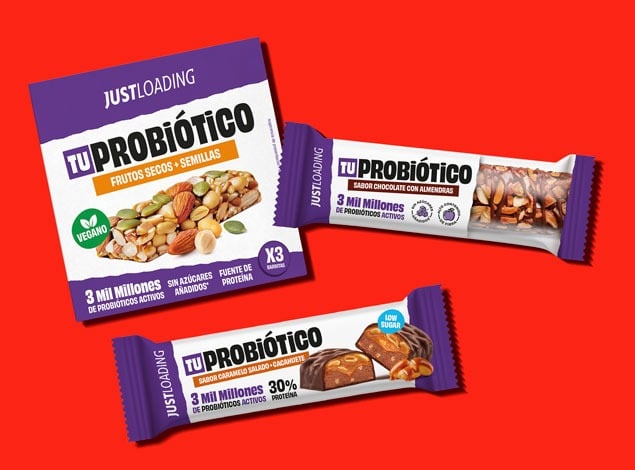
A protein bar with probiotics brings protein and live bacteria together in one format. JustLoading has three, with quite different profiles. Here is what each contains, how they differ from a regular protein bar and who they suit. All of them sit in the probiotic bars category.
What a protein bar with probiotics is
What is a protein bar with probiotics?
It is a bar that combines protein or nuts with live probiotic-type bacteria in the same format. The JustLoading ones declare 3,000 million CFU (colony-forming units) per bar, on top of their protein or fibre profile. You eat it like any other bar, with no preparation.
What are probiotics?
They are live micro-organisms, mostly bacteria, found in fermented foods such as yoghurt or kefir and added to some products. They are counted in CFU. In the European Union no health claim is authorised for them, so what can be said is which strain they contain and how many CFU.
If you want to understand the difference between prebiotics and probiotics, we explain it more calmly in prebiotics and probiotics.
What is a functional snack?
A snack that, besides filling you up or giving you energy, contains an added ingredient with a specific purpose; in these bars, active probiotics and fibre. Calling it functional is not a health claim: what counts is the label, such as the CFU and the grams of fibre.
How it differs from a regular protein bar
How does it differ from a protein bar without probiotics?
In essentials it is the same bar: protein or nuts, fibre and a little sweetness. The difference is that it also contains probiotic bacteria, 3,000 million CFU per bar in all three JustLoading ones. Calories, protein and sugars are compared by reading the label of each.
Do probiotics survive in a bar?
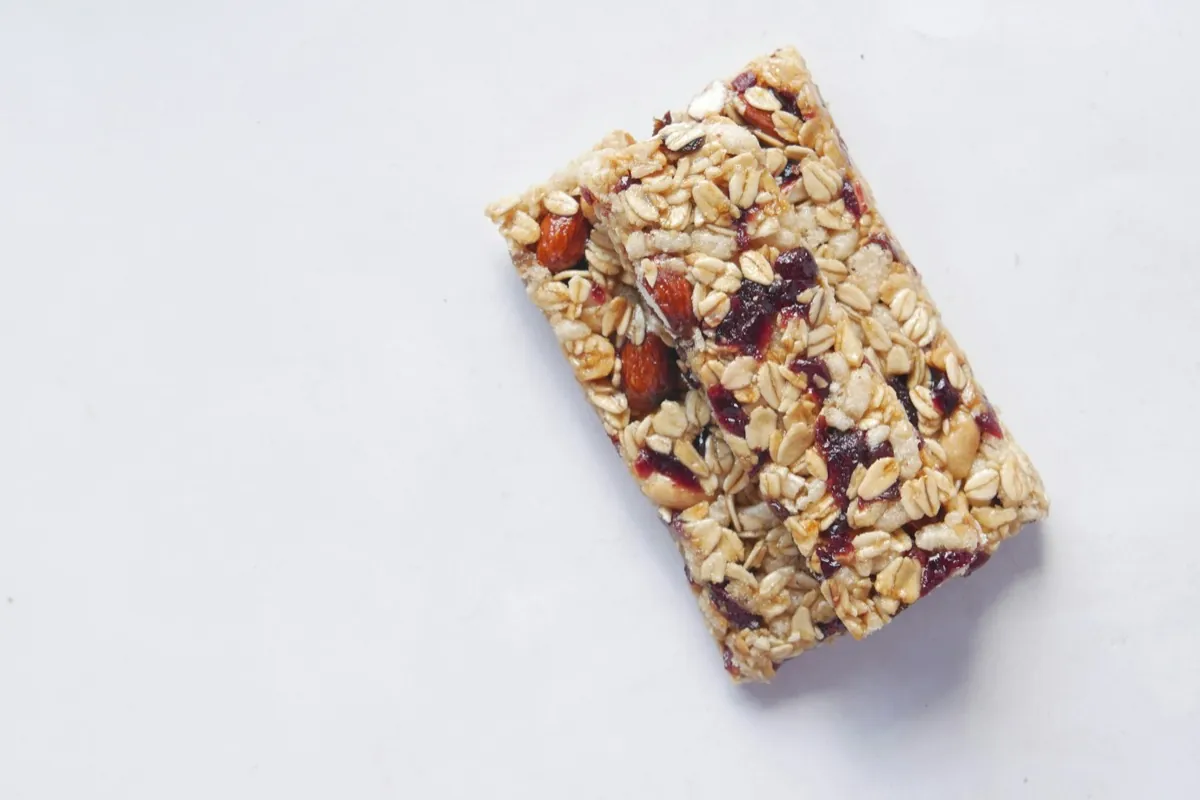
It depends on the strain and how the bar is made. The nuts and seeds bar declares encapsulated Lactobacillus rhamnosus. What the label gives is the count: 3,000 million CFU per bar.
To see how energy bars and protein bars differ in general, see the article on energy bar or protein bar. Protein bars without probiotics have their own category.
The three bars with protein and probiotics
The data come from each product page. All three contain 3,000 million CFU per bar.
| Bar | Weight | Calories | Protein | Fibre | Sugars | Vegan |
|---|---|---|---|---|---|---|
| Peanut and salted caramel | 50 g | 176 kcal | 15 g | 1.2 g | 1 g | No (contains milk) |
| Nuts and seeds | 30 g | 149 kcal | 6.1 g | 6.3 g | 1.5 g | Yes |
| Nuts and chocolate | 40 g | 189 kcal | 6.1 g | 8.2 g | 1.6 g | Not stated |
Peanut and salted caramel
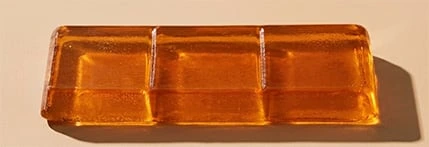
The peanut and salted caramel protein bar is made with milk protein, dark chocolate coating with maltitol and caramel cream with sorbitol. It has 29.9 g of protein per 100 g, 34% of its energy, so protein contributes to the maintenance and growth of muscle mass. It contains no gluten. Because maltitol and sorbitol are polyols, excessive consumption may have a laxative effect.
Nuts and seeds
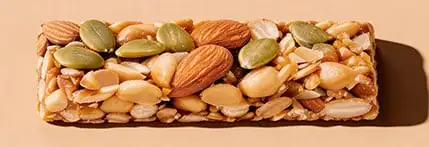
The nuts and seeds bar contains peanut (43%), almond (12%), hazelnut (10%), pumpkin and sunflower seeds, oligofructose and inulin, and encapsulated Lactobacillus rhamnosus. It is a source of protein and high in fibre, vegan, gluten free and lactose free. It is the smallest at 30 g and the one with the most fibre per gram.
Nuts and chocolate
The nuts and chocolate bar combines peanut, almond (28%), oligofructose and inulin fibre, dark chocolate with maltitol (16%) and puffed rice. It is high in fibre, gluten and lactose free, and contains 3.2 g of polyols. It is a fibre bar, with 6.1 g of protein.
Which protein bars contain probiotics?
JustLoading has three: peanut and salted caramel, with 15 g of milk protein; nuts and seeds, which is vegan; and nuts and chocolate. All three contain 3,000 million CFU per bar. The category also includes two energy bars with probiotics.
Which energy bars with probiotics are there?
Two: peanut, high in fibre, and blueberry muffin flavour, a source of fibre. Both are vegan, gluten-free, have no added sugars and contain 3,000 million CFU per bar. They are energy bars, not protein bars, and fit best as a between-meals snack.
When to eat them and who they suit
When should you eat a bar with probiotics?
Whenever suits you: between meals, after training or as a snack at work. There is no proven time at which probiotics do more. The peanut and salted caramel bar, with 15 g of protein, fits better after training, and the nut bars between meals.
Can you eat a bar with probiotics every day?
Yes, in a healthy person one a day fits in a varied diet, as long as you count its calories: between 149 and 189 kcal depending on the bar. Those containing maltitol or sorbitol can have a laxative effect if you overdo it. A bar does not replace a meal, nor fruit, vegetables and varied protein.
Are they suitable for vegans?
Only the nuts and seeds bar is vegan. The peanut and salted caramel bar contains milk protein, so it is not. The nuts and chocolate bar has no gluten or lactose, but the product page does not declare it vegan. Always check the label if you have allergies or intolerances.
