











Shopping Cart
There are no more items in your cart
TL;DR: the peanut is a legume that is high in protein and fibre: 100 g of 100 % peanut butter has 28 g of protein, 9.4 g of fibre and 665 kcal. Most of its fat is unsaturated. A handful of 25-30 g a day is a reasonable amount. If you want protein with less fat, defatted peanut powder reaches 50 g per 100 g.
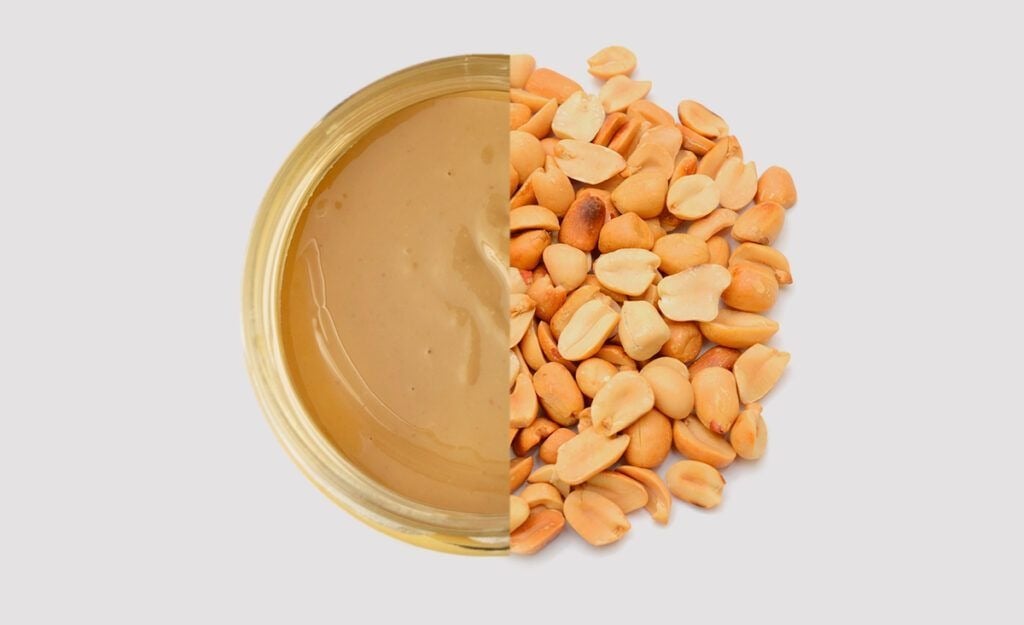
Peanuts are one of the ingredients we use most at JustLoading, in butters, in powder and in bars. This guide covers what they contain, what can and cannot be claimed for them, how much is sensible and which form to choose. For recipes, see our peanut butter recipes.
Peanut nutrition
Nut or legume?
Botanically it is a legume: it grows underground inside a pod, like the chickpea or the lentil. In the kitchen it is used as a nut, which is why it is almost always compared with almonds or walnuts. With so much fat and protein, its nutritional profile has more in common with nuts than with other legumes.
Are peanuts a superfood?
Superfood is a marketing word, not a nutritional category. What can be said is concrete: peanuts provide protein, fibre, unsaturated fat and magnesium in a small portion, and they are cheap and easy to store.
This table compares the 100 % natural peanut butter, which is roasted peanuts ground up and so reflects the whole peanut well, with defatted peanut powder.
| Per 100 g | 100 % peanut butter | Defatted peanut powder |
|---|---|---|
| Energy | 665 kcal | 421 kcal |
| Fat (saturated) | 52.5 g (8.7 g) | 12.9 g (1.9 g) |
| Carbohydrate (sugars) | 15.3 g (4.2 g) | 17.3 g (6.3 g) |
| Fibre | 9.4 g | 7.5 g |
| Protein | 28.0 g | 50.0 g |
How many calories are in peanuts?
100 % peanut butter, which is ground roasted peanuts, has 665 kcal per 100 g. A handful of 25-30 g of roasted peanuts comes to about 170-200 kcal. Defatted peanut powder drops to 421 kcal per 100 g because part of the fat has been removed.
Health benefits of peanuts
Unsaturated fats
Of the 52.5 g of fat in 100 g of peanut butter, only 8.7 g is saturated. The rest is unsaturated. Replacing saturated fat with unsaturated fat in the diet helps maintain normal blood cholesterol levels, and peanuts are one way to do it, as long as they replace other fats rather than add to them.
Are peanuts high in fibre?
Yes. 100 % peanut butter has 9.4 g of fibre per 100 g and defatted peanut powder has 7.5 g, so both count as high in fibre, which starts at 6 g per 100 g. A handful provides roughly 2 to 3 g.
Vitamin E, magnesium and plant protein
Peanuts provide vitamin E, which contributes to the protection of cells from oxidative damage. Natural peanut butter has 176 mg of magnesium per 100 g, 47 % of the daily reference intake, and magnesium contributes to normal muscle function. Its protein, 28 g per 100 g, contributes to the maintenance and growth of muscle mass.
Are peanuts bad for cholesterol?
They contain no cholesterol, because they are a plant food, and most of their fat is unsaturated. Swapping saturated fats, such as those in cured meats or pastries, for unsaturated ones helps maintain normal cholesterol levels. If your cholesterol is high, ask your doctor how much fits in your diet.
How many peanuts to eat and how
How many peanuts should you eat a day?
A small handful of 25 to 30 g is a practical guide. As peanut butter it is one or two tablespoons. It is an amount you notice in how full you feel without sending calories through the roof, but it is not a rule: adjust it to what you eat the rest of the day.
Do peanuts make you gain weight?
No single food makes you gain weight. Peanuts are calorific, at 665 kcal per 100 g as butter, and eating them by the handful without measuring adds up fast. At 25-30 g, about 170-200 kcal, they fit into a normal diet if they replace another snack.
Is it better to eat peanuts raw or roasted?
Both are fine, and the nutritional differences are small. Roasted peanuts have more flavour and are the ones used in the butter. What deserves attention is the preparation: fried peanuts or ones with plenty of added salt add sodium and fat that bring nothing useful.
Which is healthier, peanuts or almonds?
Both are a good choice. Comparing the 100 % butters of each, peanut butter has 28.0 g of protein per 100 g against 19.4 g in almond butter, while almond butter has more magnesium, 270 mg against 176 mg. They are close enough that variety is the best answer.
To compare with other nuts, see our guide to the benefits of nuts.
Peanut butter or peanut powder
Both have a single ingredient, the peanut, and both are rich in fibre and plant protein. What changes is what you use them for. The question that helps you choose is what you want to replace.
Peanut butter was made for spreading: toast, pancakes, sponge cakes, fruit, smoothies. The powder behaves more like a flour than a cream, and that is where it is useful.
Before buying either, read the ingredient list. In a peanut butter you should expect to see peanuts only, and sometimes salt, sugar or added oils to stop it separating. JustLoading 100 % natural and crunchy butters contain only roasted peanuts; the banana one is 98 % peanuts, with added magnesium and potassium. Oil rising to the top over time is normal: stir it in.
What is peanut powder used for?
It gives peanut flavour and protein with far less fat than peanut butter. It dissolves easily in smoothies, yoghurt or oats, and can replace part of the flour in doughs. Two spoonfuls mixed with water make a light spread. It has 50 g of protein per 100 g.
One example of how to use it is the apple porridge with peanut powder.
Precautions with peanuts
Can children eat peanut butter?
With precautions. There is a risk of allergy, and of choking on the whole nut. If it is offered, it should always be a completely smooth butter, never crunchy, with an adult watching. Check with your paediatrician before introducing it, especially if allergies run in the family.
Does peanut butter cause constipation?
It is not a food that tends to constipate: the butter has 9.4 g of fibre per 100 g. If your digestion feels slower, check how much water you drink and how much fibre you eat overall, because fibre works better with fluid. If it keeps happening, talk to your doctor.
Peanuts and their derivatives are allergens: if you are allergic to peanuts, avoid them completely.
