










Shopping Cart
There are no more items in your cart
TL;DR: three no-oven peanut butter recipes that take a few minutes: a yoghurt and strawberry smoothie, banana and berry toast, and a chocolate mug cake that cooks in 1 minute 30 seconds in the microwave. Each uses one spoonful of peanut butter. As a daily guide, 1 or 2 tablespoons (15-30 g) is enough, because 100 g of peanut butter provides 665 kcal.
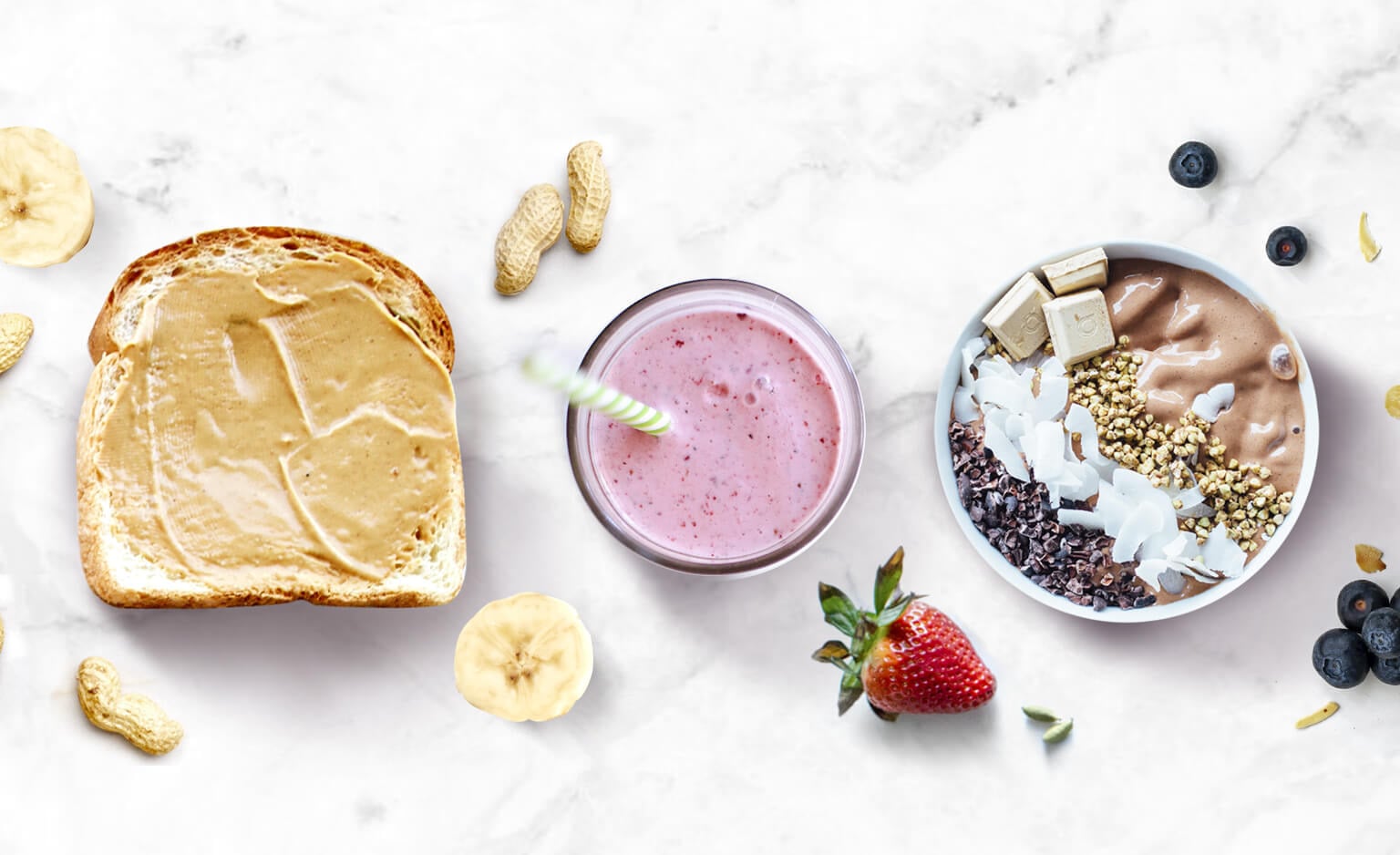
Peanut butter is good for more than spreading on toast. Here are three recipes made with fridge and cupboard staples, one for each part of the day, followed by a short guide to what to pair it with and how much to eat. If you want to know what peanuts contain, we cover it in the peanut properties and benefits guide.
Yoghurt, fruit and peanut butter smoothie
A homemade smoothie lets you control the sweetness and takes about as long as chopping the fruit. This one uses yoghurt, banana and strawberries, with the peanut butter on top so the first sip already tastes of peanuts.
Ingredients (1 glass):
- 125 g plain yoghurt or whipped fresh cheese (soya or coconut yoghurt makes it vegan).
- Half a banana.
- 3 or 4 strawberries.
- Chia or flax seeds. Soak the chia in water for 1 hour first.
- Liquid sweetener, if you need it.
- 1 tablespoon of peanut butter.
- To decorate: desiccated coconut, cacao nibs or nuts.
Method:
- Put the chopped yoghurt, banana and strawberries in the blender with the seeds. If you have no strawberries, kiwi or red berries work too.
- Blend to the texture you prefer and pour into a glass.
- Top with the peanut butter and the coconut.
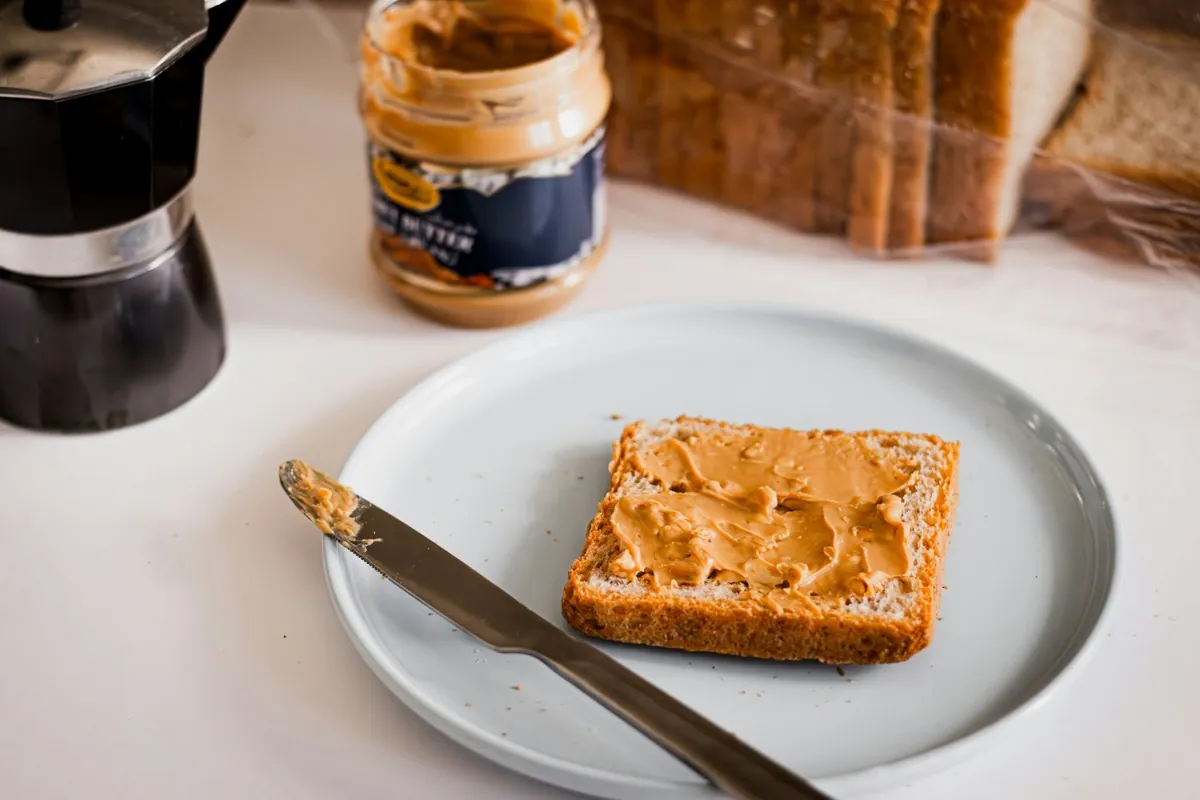
Peanut butter, banana and berry toast
This is the usual breakfast with a bit more fruit. Wholegrain or sourdough bread holds the banana better and keeps you full until lunch.
Ingredients (2 slices):
- 2 slices of bread, preferably wholegrain or sourdough.
- 1 banana, thinly sliced.
- A handful of red berries or sugar-free raspberry jam.
- 1 tablespoon of peanut butter.
- Alternative: baked apple with cinnamon instead of the banana and berries.
Method:
- Spread the peanut butter on the bread, toasted or not.
- Arrange the banana and berries on top. For a different flavour, try baked apple dusted with cinnamon.
For a hot breakfast, try the apple porridge with peanut powder.
Chocolate protein mug cake with peanut butter
This one is for when you want something sweet with protein and no oven. It is made in a mug and cooked in the microwave.
Ingredients (1 mug):
- 1 tablespoon of oat flour or rolled oats.
- 1 scoop of whey (about 10 g) or plant protein.
- 1 egg white.
- A splash of milk or plant-based drink.
- 1 teaspoon of cocoa powder.
- Liquid sweetener, if you like.
- 1 tablespoon of peanut butter.
Method:
- Mix everything in a wide mug or bowl until there are no lumps. If you fancy it, add a few pieces of dark chocolate.
- Microwave for 1 minute 30 seconds on full power.
- Turn the cake out onto a plate and cover it with a generous layer of peanut butter.
Any of the JustLoading nut butters works in all three recipes. The 100 % natural peanut butter contains only roasted peanuts and 28 g of protein per 100 g. The crunchy one adds small pieces, and the banana one adds magnesium and potassium.
What to pair peanut butter with
What can I eat with peanut butter?
Almost anything you have at hand: toast, pancakes, banana, apple slices, yoghurt, oats or a smoothie. Peanut butter is neutral and slightly salty, so it goes well with sweet fruit and with cocoa.
What desserts can I make with peanut butter?
The easiest need no oven: a mug cake, yoghurt with peanut butter and fruit, oat and cocoa bites, or banana with peanut butter and melted dark chocolate. If you prefer to bake, it works well in oat cookies and sponge cakes.
What quick recipes can I make with peanut butter?
The ones on this page: a smoothie, toast and a mug cake, all in a few minutes. Another quick option is to use it as a topping on pancakes, with sliced banana.
If you want a full recipe, try the protein pancakes with three different spreads.
What quick snack can I make with rice cakes and peanut butter?
Spread rice cakes with a layer of cocoa cream and leave them in the freezer for a few minutes to set. Top with peanut butter, a spoonful of natural yogurt and a handful of nuts. It takes under 15 minutes and needs no oven.
The cocoa, hazelnut and date cream from JustLoading works well here.
Savoury ideas
It also works in savoury cooking. Stir a spoonful into warm water with a splash of soy sauce and lime juice for a satay-style sauce for chicken or vegetables. With a little vinegar or lemon, it makes a dressing for coleslaw or cold noodles.
How much peanut butter to eat and when
When is it good to eat peanut butter?
Whenever it suits your day: at breakfast, as an afternoon snack, or before training if you tolerate it well. It contains fat and fibre, so it keeps you full. If you train first thing and it feels heavy, save it for afterwards.
How many tablespoons of peanut butter can you eat a day?
As a practical guide, one or two tablespoons, which is 15 to 30 g. A 15 g spoonful of the 100 % natural butter provides about 100 kcal and 4 g of protein. It is not a fixed rule and depends on what you eat the rest of the day.
How long does peanut butter last once opened?
Check the storage instructions after opening on the jar. Keep it tightly closed in a cool, dry place and always use a clean spoon. Oil rising to the top is normal in a butter without stabilisers: just stir it back in.
Does peanut butter raise cholesterol?
It is a plant food, so it contains no cholesterol. Of its 52.5 g of fat per 100 g, only 8.7 g is saturated and the rest is unsaturated. It is still a high-calorie fat, so it is worth measuring the amount.
Are there any contraindications to peanut butter?
The main one is peanut allergy, which can be severe: if you have it, avoid it completely. It is also very calorific, at 665 kcal per 100 g. For young children, crunchy texture carries a choking risk, so check with your paediatrician first.
