














Shopping Cart
There are no more items in your cart
TL;DR: Bloating after eating almost always comes down to how you eat, not an illness: eating too fast and swallowing air, large portions, fizzy drinks, polyol sweeteners, pulses, lactose and increasing fibre too quickly explain most cases. Chewing slowly, spreading meals out and raising fibre over several weeks, not all at once, resolves a good part of them. If the bloating doesn't ease within weeks, comes with unintended weight loss, blood in your stools, severe pain or fever, or starts for the first time after the age of fifty, that calls for a medical appointment, not a change of diet.
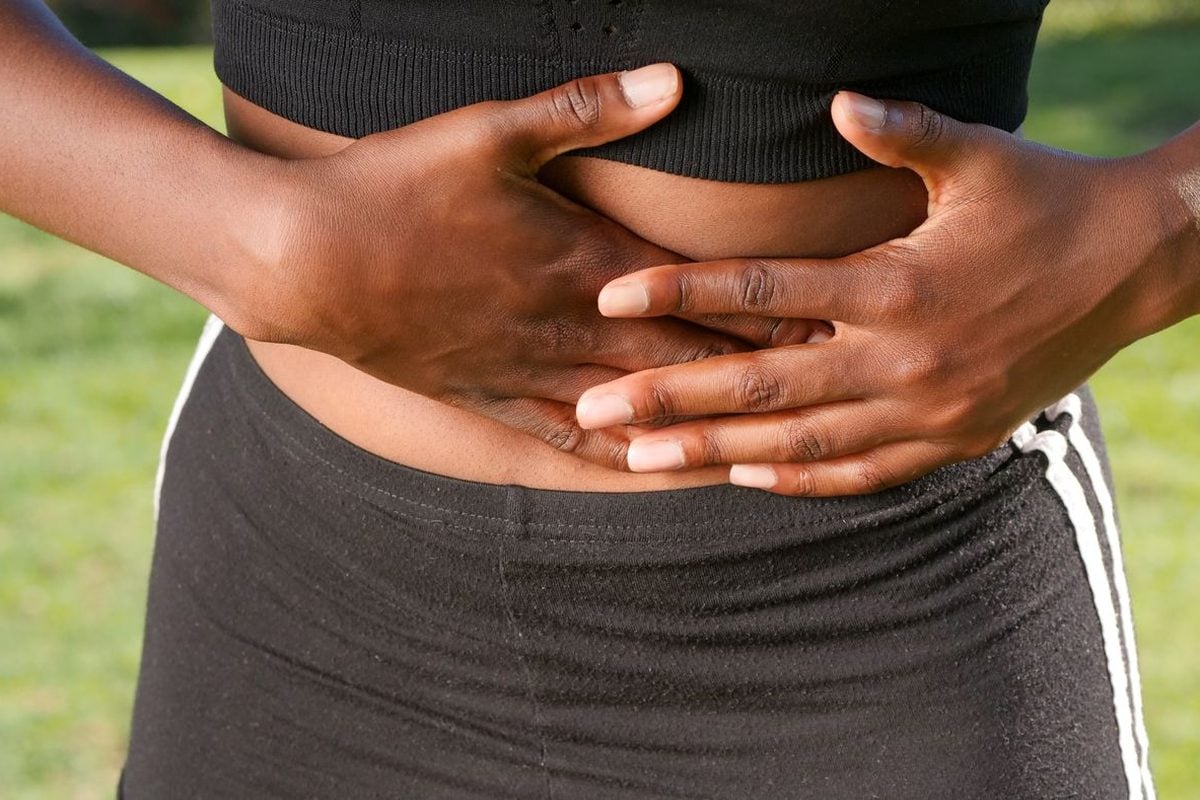
"My stomach bloats after eating" is one of the most searched complaints, and a good part of what answers it describes conditions an average reader has no reason to run into. Before getting there, there's a more common and fixable stretch: how you eat, what you eat and how fast you raise your fibre intake. That's the ground this article covers; the rest gets its own section at the end.
What causes bloating after eating: the causes on your plate
It's worth reviewing first the habits that explain most of the bloating that shows up right after eating. None of them is a diagnosis: they're ways of eating that can be changed.
What causes abdominal bloating?
Eating too fast, swallowing air with meals, consuming very large portions, fizzy drinks, and using polyol sweeteners are frequent causes. Other factors include pulses, cruciferous vegetables, lactose intolerance, and suddenly increasing fibre intake. Identifying which of these fits is usually possible by checking your recent food choices.
Eating too fast puts air into the stomach without you noticing, and that air ends up coming out as a burp or as bloating; talking a lot, drinking through a straw or chewing gum add air the same way. Very large portions cause bloating for a different reason: the stomach stretches to make room, and that tightness shows up before digestion even starts.
Fizzy drinks introduce their own CO₂, which seeks an escape in the same way that swallowed air does. Polyol sweeteners like sorbitol, mannitol and xylitol — often found in "sugar-free" products and chewing gum— aren't efficiently absorbed by the small intestine, leading to fermentation in the colon with gas as a very common outcome.
Why do I bloat after eating pulses?
Cabbage, cauliflower, broccoli and pulses contain complex sugars that the small intestine doesn't fully digest. These reach the colon largely intact, where fermentation produces gas. A normal digestive process, not an intolerance, it can often be reduced by soaking pulses or slowly introducing cruciferous vegetables into the diet.
The mechanism is similar with lactose, although the origin differs: those who produce little lactase don't digest milk sugar well. Undigested lactose then ferments further in the digestive tract, becoming noticeable between half an hour and two hours after consuming a specific dairy product. That makes it easy to identify the problem meal by meal.
Why does my stomach bloat more in the evening than in the morning?
Because gas builds up over the course of the day: every rushed meal, every fizzy drink and every large portion adds its share, and the gut doesn't clear that volume all at once. On top of that come more hours sitting down and less movement, so it's normal to notice more bloating by the end of the day than right after getting up.
| Common cause | What gives it away | What to try |
|---|---|---|
| Eating too fast or talking a lot while eating | Bloating and burping right after finishing a meal | Chew more, eat without rushing, avoid straws and chewing gum |
| Very large portions | Tightness while the stomach is still full | Split the same amount of food into more, smaller meals |
| Fizzy drinks | Bloating rises right after drinking, with burping | Still water, herbal tea or water with lemon |
| Polyol sweeteners (sorbitol, xylitol, mannitol) | Gas that coincides with "sugar-free" products or chewing gum | Check the label and cut that source for a few days |
| Pulses and cruciferous vegetables (cabbage, broccoli, cauliflower) | Gas and bloating several hours later, not immediate | Soak pulses properly and introduce cruciferous vegetables gradually |
| Lactose | Bloating between 30 minutes and 2 hours after a specific dairy product | Try lactose-free dairy or fermented options like yoghurt |
| Raising fibre too quickly | Starts when changing diet or adding a new supplement | Increase the amount over several weeks and drink more water |

Fibre: the cause and the solution at the same time
Of the causes above, fibre deserves its own section: it's the only one that works both ways. Introduced badly, it causes bloating; introduced well, it's exactly what improves transit over the medium term.
Can fibre cause bloating?
Yes, especially if the amount goes up all at once. The colon ferments the fibre that isn't digested in the small intestine, and that fermentation generates gas; if within a few days you go from almost no fibre to a large serving — by changing your diet or starting a supplement — the colon suddenly gets more than it comfortably handles. The usual reference is around 25-30 g of fibre a day, and a good part of people fall short of that, which tempts them to make up the difference quickly.
The way to avoid it isn't to stop taking fibre, but to raise it slowly: add a little every few days and always pair it with more water, because a good part of soluble fibres need that liquid to work without causing tightness. Done that way, within a few weeks the same amount that caused bloating at first stops being noticeable, and that's when it genuinely starts helping bowel rhythm.
Which probiotics are good for abdominal bloating?
Currently, no probiotic strain can be officially recommended for bloating within the European Union due to a lack of authorised health claims. Despite what some labels might suggest, this article explains the established role of specific fibres and their required amounts instead.
For a deeper dive into the difference between prebiotic fibre and probiotics, and what can genuinely be said about each, see prebiotics and probiotics. The probiotic bars category provides a straightforward way to explore fibre options without unnecessary complexity, and shows what's currently available.
What to do today to reduce bloating
None of this is complicated. It's the fastest route to reducing abdominal bloating without relying on any supplement, and most people notice a difference within a few days if they combine several things at once, not just one.
What can I do to get rid of abdominal bloating?
Chew more slowly, opt for smaller meals taken at longer intervals, and swap fizzy drinks for water or herbal tea. A short walk after eating can also help gas move along, and if you've recently increased your fibre intake, easing back slightly before gradually increasing it often resolves any discomfort.
Does drinking more water help reduce abdominal bloating?
Yes, especially when the cause is fibre or a heavy meal. Water helps soluble fibres form the gel they're supposed to form instead of staying thick, and it helps the gut move that volume along. It doesn't replace the other changes, but without it any of the other measures works less well.
On oats, one of the fibre sources that tends to sit best because of its texture, there's more detail in oat properties and benefits. And to compare psyllium, inulin, glucomannan or beta-glucans and choose a supplement, that comparison is in which fibre supplement to choose.
When bloating stops being about diet
Everything above covers most cases: bloating that comes and goes, traceable to a specific meal, that improves once you change a habit. There are signs that don't fit that pattern, and in those cases what's needed isn't a diet adjustment, but a doctor's appointment.
What should I do if my abdominal bloating won't go away?
Instead of waiting for persistent bloating to resolve, book a medical appointment. Bloating that lasts several weeks without an obvious explanation from food intake, and is accompanied by unintended weight loss, blood in your stools, severe pain, vomiting or fever, can indicate a need for professional assessment. Likewise, sudden and sustained changes in bowel rhythm, or bloating that begins after the age of fifty, warrant a medical check-up, instead of an adjustment to your diet.
What fibre is, which foods contain it and how much you need daily has its own detailed guide in benefits of fibre for a healthy diet.
Remember: if you have any doubts about your particular case, talk to a healthcare professional. Food supplements are not a substitute for a varied and balanced diet.
