









Shopping Cart
There are no more items in your cart
TL;DR: Psyllium is the husk of the Plantago ovata seed: a soluble fibre that absorbs many times its weight in water and forms a thick gel. That gel is where everything it does comes from — stool bulk, more regular transit, satiety — and its one serious risk: with too little water, especially in capsule form, it can cause choking or a blockage. The amount to take is set by the pack. On its own, it doesn't make you lose weight.
Psyllium is sold for almost everything: to help you go, to help you stop going too often, for appetite, and for whatever else fits on a label. Behind it is a seed husk that swells in water, and that's where what it does, and what it doesn't, comes from. Here it is without holding back, including the part that doesn't appear on the packaging: when to take it carefully, and when another fibre works better.
What psyllium is and why it swells
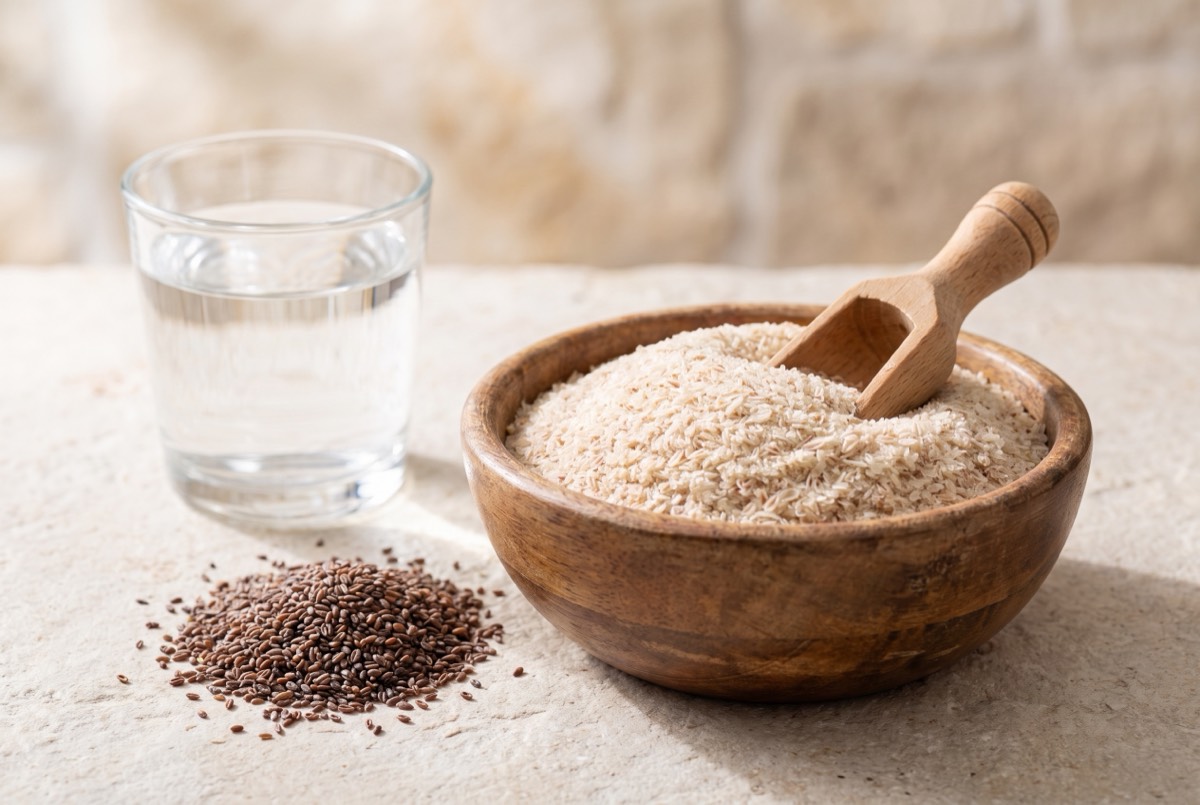
Plantago ovata is a small plant grown mainly in India. What's sold as psyllium isn't the seed itself but its husk, sometimes labelled ispaghula in pharmacies. It's almost entirely mucilage, a soluble fibre that absorbs many times its weight in water and turns into gel. Everything it does, that gel does.
What is psyllium and what is it used for?
Plantago ovata seed husk, a soluble fibre, absorbs water and forms a thick gel. This helps add bulk to stools for more regular movement and creates a feeling of fullness in the stomach, as it takes up room. It does not stimulate or irritate.
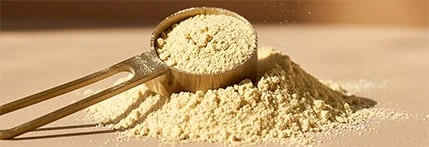
It's sold in three formats. The whole husk, in flakes, thickens more slowly. The fine powder thickens almost instantly and is used in cooking too, as a binder in gluten-free bread. Capsules avoid the texture, but demand more care with water.
How to take psyllium: water, amount and timing
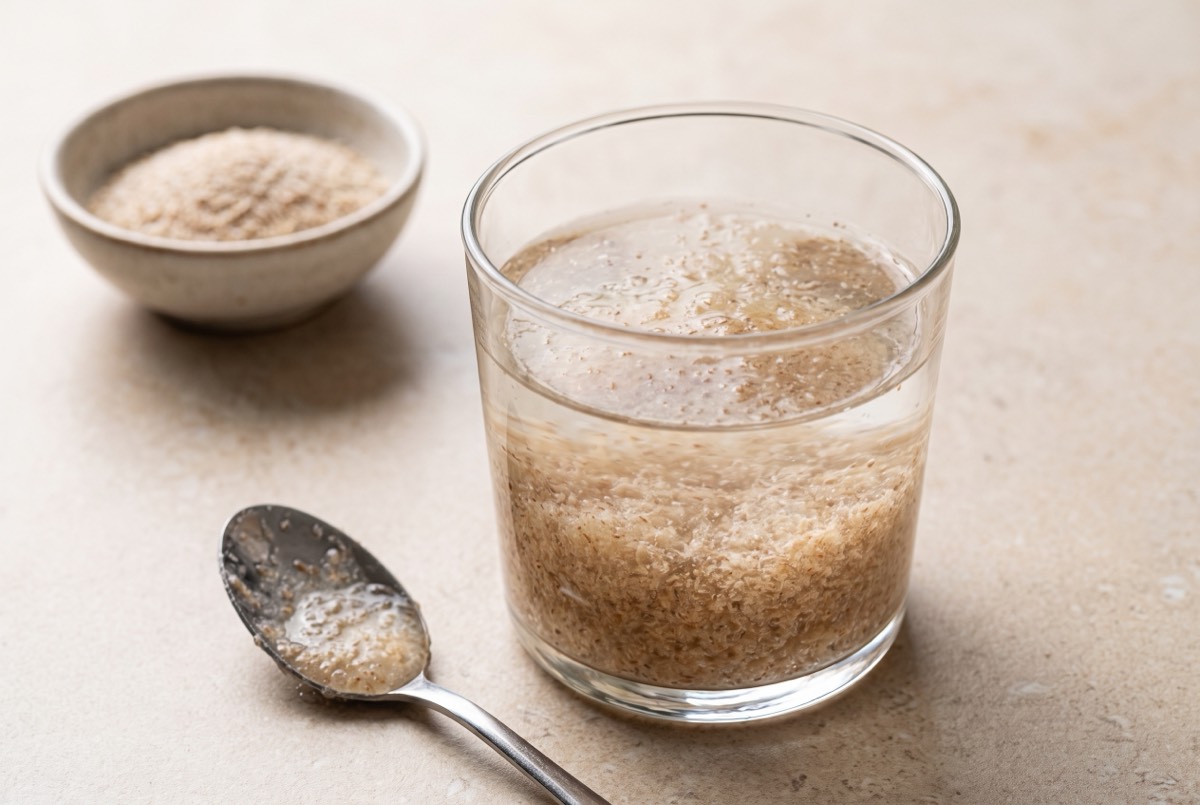
The right way fits into one sentence: stir the dose into a large glass of water, drink it straight away, before it thickens, and drink a little more afterwards. Wait too long and the glass turns to jelly; take it with too little liquid and it swells where it shouldn't. Juice or a smoothie work fine too. Never dry.
How much psyllium should I take a day?
Whatever the pack states, begin with the lowest recommended amount and maintain that dose for several days before increasing it. There isn't a single figure suitable for everyone, as a spoonful of fine powder differs from the same amount of whole husk or a capsule. People often find it disagrees with them when they increase the dose too quickly.
Psyllium is a top-up, not the foundation. The daily fibre reference sits at 25-30 g and most of us fall short by half; that gap is covered by pulses, vegetables, fruit with the skin on and whole grain, which is what the guide on high-fibre foods covers. Trying to close it with spoonfuls of psyllium is the surest way to end up bloated.
What's the best time of day to take psyllium?
Whichever one you can repeat every day: consistency matters more than the exact hour. If you're taking it for satiety, a while before your main meal; if it sits heavy in the morning, take it with lunch or dinner instead. Two things to avoid: right before bed, and at the same time as any medication.
The reason: the gel can delay the absorption of anything taken alongside it; the usual guidance is to space it a couple of hours apart from any drug or supplement.
When does psyllium start working?
Satiety, in the same serving: the gel forms in the glass within minutes and reaches the stomach already swollen. Transit takes longer: it responds within the first few days of consistent use, not after the first spoonful. If a few weeks in, taken daily and with water, you notice nothing, sticking with it won't change that.
Who shouldn't take it, and what side effects it has
Psyllium is one of the best-tolerated fibres, and that's exactly why its one serious risk goes unnoticed. It isn't a matter of dose or duration: it's a matter of water. A husk that multiplies its volume when wet has to reach the stomach with plenty of liquid to spare.
Who should avoid psyllium?
Anyone with difficulty swallowing, a diagnosed intestinal narrowing or obstruction, or an allergy to Plantago ovata. And no one should take it without enough liquid: without water, especially in capsule form, it can swell before it reaches the stomach and cause choking or a blockage. If you notice chest pain, vomiting, or difficulty swallowing or breathing, seek medical attention.
There's no need to overdramatise it, but it is worth taking seriously: it's a warning printed on the packaging that almost no one reads; it doesn't come up if you take a large glass of water with every dose. Anyone on regular medication, pregnant, or thinking of giving it to a child should check first.
What side effects does psyllium have?
Gas, bloating and a feeling of heaviness can occur in the first few weeks, particularly when starting on the full dose. Softer, bulkier stools are also common, as this is the intended effect. It causes less gas than fibres which ferment in the colon, like inulin, as its gel barely ferments. However, insufficient water can cause everything to come to a stop.
What happens if I take psyllium every day?
Nothing other than what it's meant to do: it's designed for daily use, with water and in a steady amount, and the gut handles it better that way than on and off. What's worth knowing: the effect lasts only as long as you keep taking it: it doesn't fix anything permanently, it works while there's gel.
Psyllium, flaxseed and chia: what they share, and what they don't
All three form gel when wet and are sold as a source of fibre, and that's where the similarity ends. Flaxseed and chia are whole seeds, foods: alongside fibre they bring fat, protein and calories. Psyllium is just the husk: almost pure fibre.
| Which one | What it is | How it works | How to take it | What to expect |
|---|---|---|---|---|
| Psyllium | Husk of the Plantago ovata seed; almost pure fibre, with no fat and hardly any calories | Absorbs many times its weight in water; thick gel within minutes; barely ferments | In a large glass of water, drunk straight away; in capsules, always with water | Fullness in the same serving; bulkier stools within a few days; little gas |
| Flaxseed (linseed) | Whole seed: soluble and insoluble fibre, fat — plant-based omega-3 — and protein | Milder gel; whole, it passes through almost undigested | Ground fresh, over yoghurt, porridge or smoothies; ground and left exposed to air, it turns rancid | Adds fibre and calories at the same time; a milder effect on transit |
| Chia | Whole seed: fibre, fat — also omega-3 — and protein | Forms gel as it sits, more slowly and less densely | Soaked until it sets, in a pudding or in smoothies; also ground | Pudding-like texture; adds fibre within a meal |
Which is better, flaxseed or psyllium?
It depends what you're after. For adding bulk to transit or taking the edge off your appetite without adding calories, psyllium, because it's almost pure fibre and forms a much denser gel. As a food that adds fibre, fat and protein to breakfast, ground flaxseed. Whole, it passes through almost intact.
Is psyllium the same as chia?
No. Chia is a whole seed that you eat, with its own fat and protein, and its gel forms slowly and stays less dense. Psyllium is the husk of a different seed, nothing but fibre, and its gel sets within minutes. They can be combined, but they don't substitute for each other at the same amount.
Psyllium for weight loss: what it does and what it doesn't
It's worth separating two things that advertising deliberately lumps together. That a glass of gel takes up room in the stomach is a physical fact. Whether that makes you weigh less no longer depends on psyllium.
Is psyllium effective for weight loss?
On its own, no. It gets you to the table with less appetite, because the gel takes up volume in the stomach, and if that makes you eat less, the difference comes from the deficit, not from psyllium. Anyone who takes it without changing anything else doesn't lose weight; anyone in a deficit loses weight just the same without it.
If that's the goal, the order is the opposite of what the label suggests: the plate and the training come first, with psyllium as help with appetite. How to set up that deficit without losing muscle is covered in how to lose weight without losing muscle mass.
When another fibre works better than psyllium
First, to be clear: JustLoading doesn't carry psyllium in its catalogue. If everything above matches what you're after, buy it at the health food shop, the pharmacy or the supermarket, and that's the end of it. This section is for the cases where it doesn't fit.
The most common one is texture. Some people gag on the gel, or don't have time to drink it before it thickens, and for that group a fibre that dissolves without thickening, such as oat beta-glucan or GOS, can go into coffee or yoghurt without watching the clock.
The second is the goal. In Europe, psyllium has no recognised function for cholesterol; the one that does is oat beta-glucan, from 3 g a day of that component, and few products reach it. And to go to the toilet more often, chicory inulin has its reference at 12 g a day, with an honest warning: it's one of the ones that causes the most gas. That's not a question of building tolerance, it's a different goal.
The third is format. Anyone who doesn't want a tub of powder can add fibre through a bar, no glass and no clock required, which is what's available in the probiotic bars category.
The comparison of the six fibres sold as powders — what each one is for, how much you need and how it sits — is in fibre supplements: which one to choose, the read for when the question isn't "what is psyllium?" anymore, but "which one do I buy?"
Remember: if you have any doubts about your particular case, talk to a healthcare professional. Food supplements are not a substitute for a varied and balanced diet.
