











Shopping Cart
There are no more items in your cart
TL;DR: "Beta-glucan" names three different things. The ones from oats and barley are soluble fibre with two authorised claims: 3 g a day for cholesterol, 4 g per 30 g of carbs for blood sugar. The ones from mushrooms and yeast are sold for immune support, with no recognised claim in the European Union. And a blood test uses the same term to detect fungal infection, unrelated to either. Most products carrying this ingredient don't reach those grams per serving: what matters is the amount, not whether the label names it.
Searching "beta-glucans" mixes together pages about different things that share the same name: an article about oat fibre, a mushroom-extract supplement for immune support, and a medical glossary entry about a blood test. They share a word, not an origin or a function.
What a beta-glucan is, and why the same name covers three different things
A beta-glucan is, put simply, a long chain of glucose molecules linked together in a specific way. That definition applies just as much to the one in a flake of oats as to the one that forms a mushroom's cell wall: they share a name, not a structure or what the body does with each one. Of the three sources that get mixed up in any search, only one is classified as soluble fibre with a recognised function.
What is beta-glucan and what is it used for?
It depends which one. The one from oats and barley is soluble fibre, forms a gel in the gut, and has a recognised function for cholesterol and for blood sugar after eating. The one from mushrooms and yeast is a different component of the cell wall, sold for the immune system, with no authorised claim behind that promise.
| Source | What type of fibre it is | What can genuinely be attributed to it | How much you need |
|---|---|---|---|
| Oats and barley | Soluble fibre, forms gel in the gut | Contributes to the maintenance of normal blood cholesterol levels; contributes to the reduction of the blood glucose rise after that meal | 3 g a day (cholesterol); 4 g per 30 g of carbohydrates in the meal (blood sugar) |
| Mushrooms (reishi, shiitake, maitake and similar) | Cell-wall polysaccharide, not the same fibre as the one in oats | Nothing authorised in the European Union; marketed for immune support with no recognised claim | No amount is set by law |
| Yeast (Saccharomyces cerevisiae) | Cell-wall polysaccharide, also different from the one in oats | Nothing authorised in the European Union; the same territory as the mushroom one | No amount is set by law |
There's a third mix-up that doesn't deserve its own section but does deserve a sentence: the blood test that comes back with a positive "beta-D-glucan" result looks for a fragment of fungal cell wall in hospitalised patients with suspected infection. It has no connection to oats or to any supplement: it's the same word in a clinical context that has nothing to do with nutrition.
What foods are rich in beta-glucan?
Oats and barley are the primary sources, especially in their bran where it is more concentrated than in the whole grain. Though smaller amounts can be found in other whole grains, edible mushrooms also contain beta-glucan; however, the proportions vary considerably, and there is no standardised portion size as with oats.
Oat and barley beta-glucans: the fibre that does carry a claim
Beta-glucan from oats and barley is soluble; it forms a viscous gel when in contact with water, thickening the gut. The gel traps bile salts made from cholesterol, prompting the body to use more blood cholesterol to replace them. It also slows sugar absorption into the bloodstream, resulting in a slower rise in blood sugar levels.
That's where the two recognised claims come from, each with its own condition. The first says it contributes to the maintenance of normal blood cholesterol levels, and requires 3 grams of beta-glucan a day. The second says it contributes to the reduction of the blood glucose rise after that meal, with a different condition: 4 grams per 30 grams of carbohydrates in that meal, not a fixed daily figure.
The nuance that almost never gets mentioned is that having oats on the ingredients list doesn't mean reaching those grams. A handful of flakes in a smoothie or a bar with a bit of bran usually provides only a fraction. What matters is the gram amount, not whether oats appear on the label.
How does beta-glucan affect cholesterol?
It helps lower it, not resolve it for good. The gel it forms in the gut traps bile salts made from cholesterol and forces the liver to produce more of them from the cholesterol already circulating, which lowers its level in the blood. The effect only holds up with the 3 grams a day.
What are the contraindications of beta-glucans?
For the oat and barley ones, mostly digestive: raising the amount all at once causes gas and bloating, and it's worth pairing it with water. It can also interfere with the absorption of some medications taken at the same time. Anyone with a diagnosed digestive condition should check with a healthcare professional.
Mushroom and yeast beta-glucans: a different ingredient, a different promise
The beta-glucan from mushrooms and from yeast (almost always Saccharomyces cerevisiae) is also a cell-wall polysaccharide, but with a structure different from the one in oats: instead of a straight chain, it forms branches. That's why it isn't classified as the same soluble fibre and doesn't carry the same claims.
It's the one found in capsules and combination products for the immune system, almost always alongside vitamin C, vitamin D or zinc in the same bottle. There's ongoing research into how it interacts with immune cells, but in the European Union there is currently no authorised health claim for this beta-glucan. The label promises more than the regulation allows anyone to say.
Where oat beta-glucans come from: flakes, bran and extracts
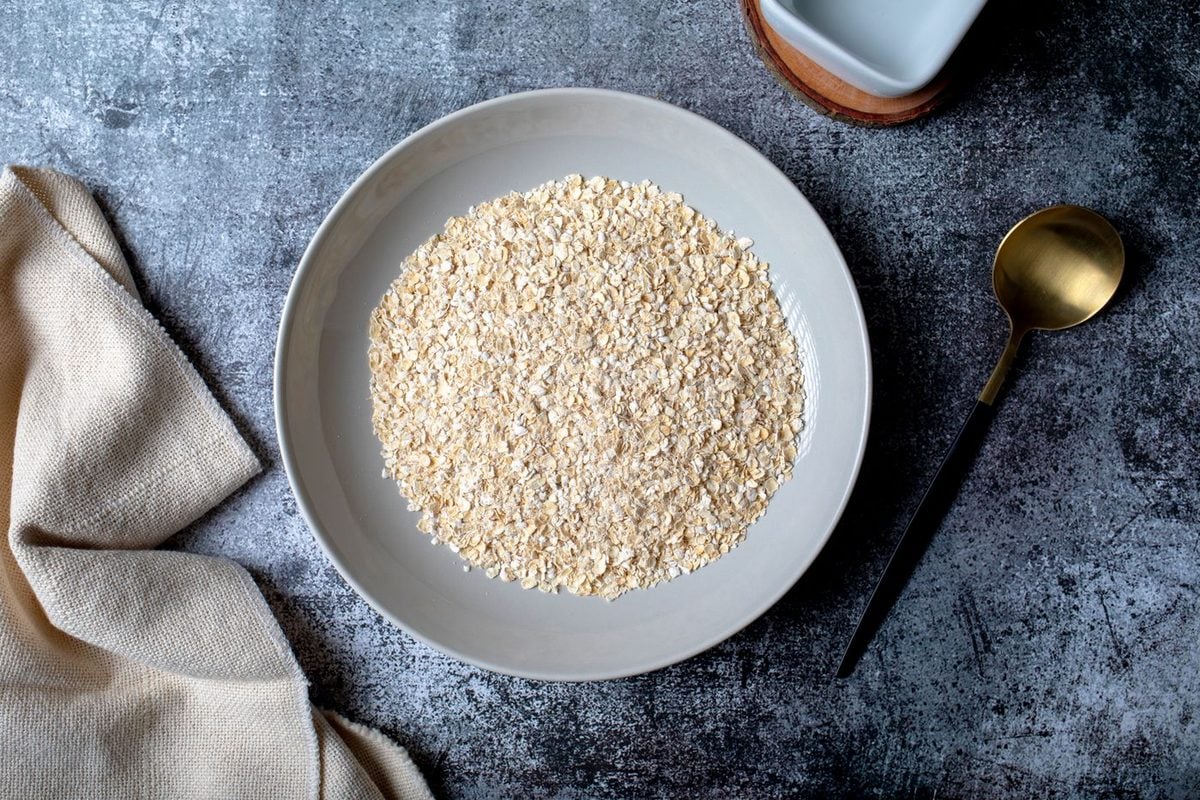
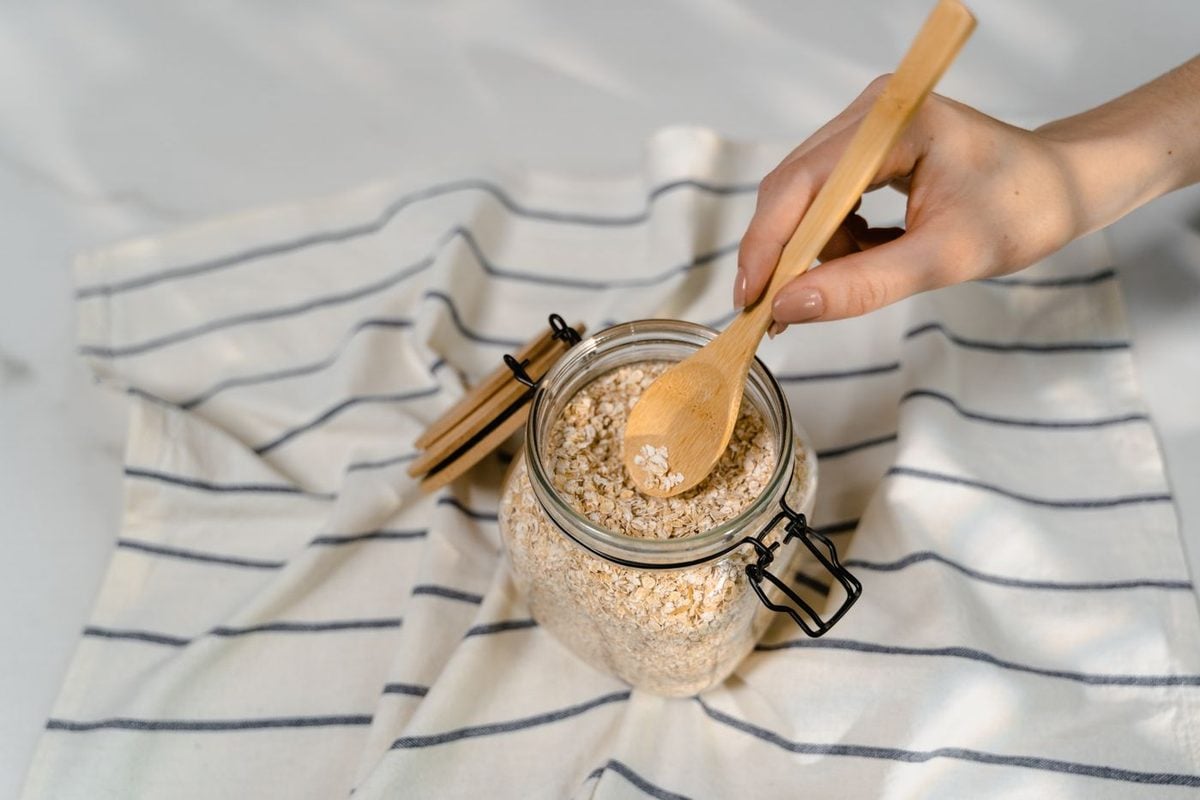
Within the oat grain, beta-glucan is concentrated mainly in the outer layer. A whole flake carries almost the entire grain, so its concentration is the lowest of the three common forms. Bran is that outer layer separated out during milling, and it concentrates considerably more. An extract is made to push that percentage much higher, so the grams the claim requires fit into a small serving.
That difference in origin explains the variation between products, even when both list "oats" on their packaging. A concentrated extract can deliver up to 3 grams in a single serving, whereas flakes typically don't reach that level. The key is to check the gram amount of beta-glucan, rather than focusing on whether "oats" is mentioned.
This often happens with fibre powders that combine oat extract with other fibres and a probiotic: the label gives total fibre per serving, not beta-glucan, and if the beta-glucan falls short of 3 grams, the product is a source of fibre, but not a product for cholesterol. Oats as a food are covered in oat properties and benefits, and the comparison between fibres sold as supplements in fibre supplements: which one to choose. The oat bars category has formats for adding it without a powder.
What's the difference between oats and oat bran?
Oats are a whole grain, containing starch, protein and fibre in their natural proportions. Bran, separated from the rest during milling, is just the outer layer and thus concentrates more fibre — including beta-glucan — than a whole flake.
What does oat bran contain?
Mostly fibre: a mix of soluble, with beta-glucan as the main component, and insoluble. It also carries some plant protein and heart-healthy fats, in a much smaller proportion than the fibre, which is what sets this product apart from the whole grain.
How do you take oat bran?
Usually sprinkled over yoghurt, cooked oats, smoothies or homemade dough, by the spoonful rather than the cupful: a small serving already adds up. It's worth introducing it gradually and with enough water, the same as any soluble fibre that's increased too fast.
What's left to clear up
What are the contraindications of oat bran?
The same as any soluble fibre raised too quickly: gas, bloating and digestive discomfort, especially the first few times. Anyone with a diagnosed digestive condition, such as an intestinal obstruction, should check with a healthcare professional. The downsides of oats as a food are covered separately in oat disadvantages.
For fibre as a whole, the reference guide is high-fibre foods: full table and how much you need a day. And the distinction between prebiotic and probiotic is explained in prebiotics and probiotics.
Remember: if you have any doubts about your particular case, talk to a healthcare professional. Food supplements are not a substitute for a varied and balanced diet.
