











Shopping Cart
There are no more items in your cart
TL;DR: Liver provides 13,540 µg of vitamin A per 100 g, far ahead of carrots, which give 1,333 µg. An adult man needs 750 µg a day and a woman needs 650 µg, so a single serving of these foods covers your daily intake. Vitamin A comes in two forms — retinol in animal foods, beta-carotene in fruit and vegetables — and both count toward that total.
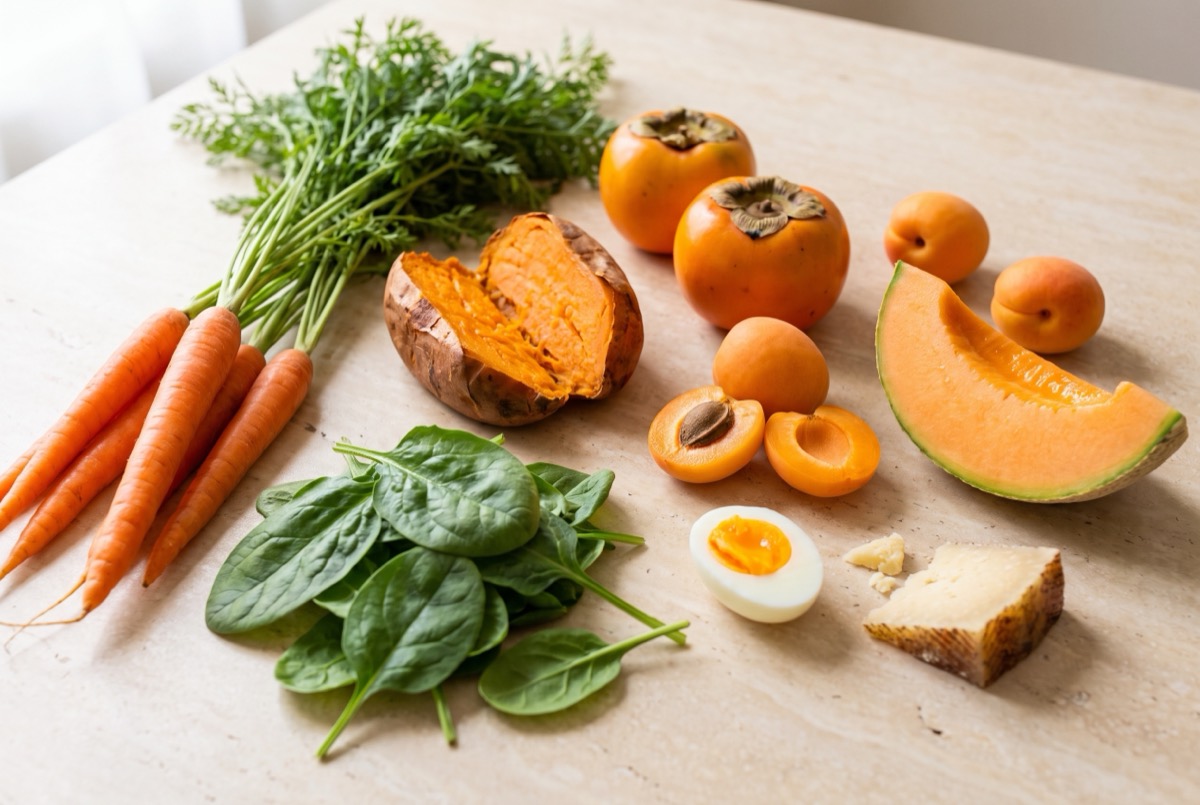
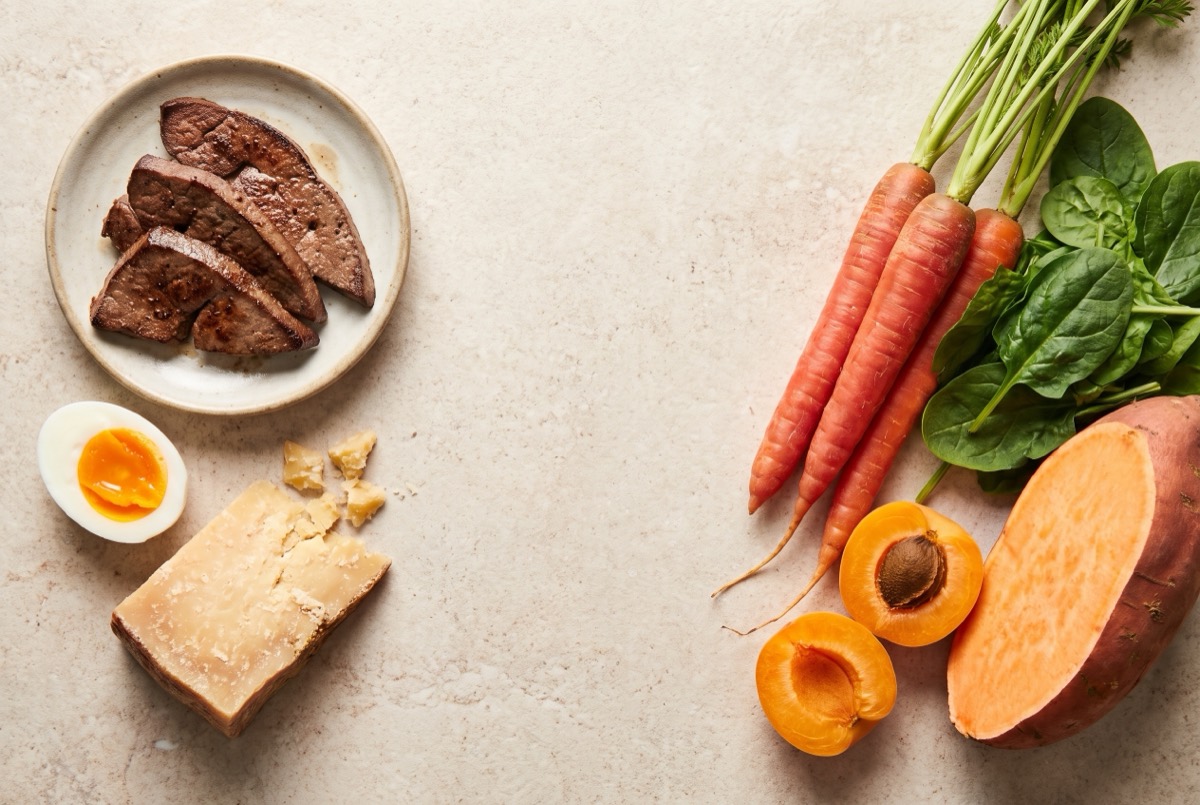
Vitamin A comes in two forms depending on the food: retinol in animal products and beta-carotene in colorful fruit and vegetables. This list brings together the foods that provide the most of each type, in micrograms per 100 grams, along with the amount you need each day.
The 10 Foods Highest in Vitamin A
The figures below are micrograms of vitamin A per 100 grams of edible portion, according to the food composition table from the Clínica Universidad de Navarra (University of Navarra Clinic). Foods like butter (828 µg), margarine (900 µg), cream (500 µg) or foie gras and pâtés (8,300 µg) are left off the list: they show high figures, but nobody eats enough of them to cover their vitamin A needs that way.
| Rank | Food | Vitamin A (µg/100 g) | Form | 100 g covers (adult man, 750 µg) |
|---|---|---|---|---|
| 1 | Liver | 13,540 | Retinol | 1,805 % |
| 2 | Carrot | 1,333 | Beta-carotene | 178 % |
| 3 | Turnip greens | 1,000 | Beta-carotene | 133 % |
| 4 | Eel and elvers | 1,000 | Retinol | 133 % |
| 5 | Spinach | 942 | Beta-carotene | 126 % |
| 6 | Sweet potato | 667 | Beta-carotene | 89 % |
| 7 | Aged Manchego cheese | 357 | Retinol | 48 % |
| 8 | Swiss chard | 338 | Beta-carotene | 45 % |
| 9 | Persimmon | 267 | Beta-carotene | 36 % |
| 10 | Apricot | 250 | Beta-carotene | 33 % |
What are the 10 foods richest in vitamin A?
Liver tops the list with 13,540 µg per 100 grams, followed by carrots (1,333 µg), turnip greens (1,000 µg), eel (1,000 µg) and spinach (942 µg). Rounding out the top 10 are sweet potato, aged Manchego cheese, Swiss chard, persimmon and apricot, ranging between 667 and 250 µg per 100 grams.
Which vegetables are rich in vitamin A?
Carrots top the vegetable list with 1,333 µg per 100 grams, followed by turnip greens (1,000 µg), spinach (942 µg) and sweet potato (667 µg). Next come Swiss chard (338 µg), tomato (207 µg), lettuce, escarole and leek (167 µg), peppers (94 µg) and pumpkin (90 µg).
Which fruit has the most vitamin A?
Persimmon is the fresh fruit with the most vitamin A: 267 µg per 100 grams. Next comes apricot, with 250 µg, and a bit further behind, melon (223 µg) and mango (201 µg). None come close to carrots or spinach, but they all add up in a varied diet.
The fish that usually shows up on these lists falls short on vitamin A: mackerel, tuna and bonito give 60 µg per 100 grams, sardines 64 µg and herring 83 µg. The exception is eel and elvers, with 1,000 µg, on par with dark leafy greens.
Retinol and Beta-Carotene: the Two Forms of Vitamin A
Retinol is the active form of vitamin A and is found only in animal foods: liver, eel, aged cheese, egg. The body uses it directly. Beta-carotene, on the other hand, is found in orange, red and dark green fruit and vegetables, and the body converts it into retinol as needed. That's why the table above mixes animal and plant foods: both count toward your daily intake, even though they're metabolized differently.
What Vitamin A Is For
Vitamin A contributes to the maintenance of normal vision, the maintenance of skin and mucous membranes, and the normal function of the immune system. It's also involved in normal iron metabolism and plays a role in cell specialization. In the retina, it's used to form rhodopsin, the pigment that captures light in low-light conditions.
How should you take vitamin A for your eyesight?
Through your diet, with the foods on this list. Vitamin A helps maintain normal vision, but it doesn't correct myopia or other eye conditions. If you notice changes in your eyesight or trouble seeing in low light, the right move is to see an ophthalmologist, not to increase your dose.
Vitamin A isn't the only nutrient involved in your defenses: vitamin C also contributes to the normal function of the immune system, and you can find out more in this guide to vitamin C or check out vitamin C tablets.
How Much Vitamin A You Need Each Day
According to EFSA, the daily reference intake for vitamin A is:
- Adult men: 750 µg.
- Adult women: 650 µg.
- Pregnancy: 700 µg.
- Breastfeeding: 1,300 µg.
How can you absorb vitamin A better from food?
It's fat-soluble, so it needs some fat to be absorbed well: a bit of olive oil, nuts or peanut butter on the same plate helps. Cooking and puréeing carrots or spinach also improves the absorption of beta-carotene, because it breaks down the plant cell walls that keep it locked in.
- Carrot with a drizzle of extra virgin olive oil.
- Sautéed spinach with a handful of nuts.
- Roasted sweet potato with a bit of oil.
- Toast with 100 % natural peanut butter and fruit.
How can you safely give a child vitamin A?
Through food: carrot or sweet potato purées, fruit and egg cover a child's needs without complications. According to EFSA, a child aged 1 to 3 needs 250 µg a day, and the figure rises with age. Supplements only make sense if a pediatrician prescribes them, because children handle excess amounts less well.
By age, EFSA sets these reference intakes:
- 1-3 years: 250 µg.
- 4-6 years: 300 µg.
- 7-10 years: 400 µg.
- 11-14 years: 600 µg.
- 15-17 years: 750 µg for boys, 650 µg for girls.
Vitamin A Deficiency and Excess
What causes vitamin A deficiency?
It's rare in developed countries. It's usually caused by a diet very low in animal foods and colorful vegetables, or by conditions that prevent proper fat absorption, such as untreated celiac disease, cystic fibrosis, or liver or pancreas disease. It doesn't show up from eating a normal, varied diet.
The most common signs are:
- Poor vision in low light.
- Dry eyes.
- Dry skin.
- More infections.
Is too much vitamin A dangerous?
Yes, retinol excess is. EFSA sets the upper limit at 3,000 µg a day for adults. A hundred grams of liver provide 13,540 µg, more than four times that limit, so liver should be occasional, not daily. Excess almost always comes from supplements or eating a lot of liver, not a typical diet.
Beta-carotene from food has no established upper limit: in excess, the most it does is give your skin an orange tint, with no other consequences. The exception is smokers, who should avoid beta-carotene supplements, not the foods that contain it.
Can you take vitamin A during pregnancy?
Yes, it's needed: the reference intake during pregnancy is 700 µg a day. The risk lies in getting too much retinol, so liver and pâtés are not recommended during pregnancy, and retinol supplements should only be taken if a doctor prescribes them. The upper limit remains 3,000 µg a day.
If you'd like to go over the rest of the vitamins and what each one does, you'll find the complete list in this guide to foods that contain vitamins.
Remember: if you have any doubts about your specific case, consult a healthcare professional. Food supplements are not a substitute for a varied and balanced diet.
