













Shopping Cart
There are no more items in your cart
TL;DR: high fiber foods are legumes, nuts and seeds, whole grains, fruit eaten with the skin on, and vegetables. EFSA sets 25 g of fiber a day for adults, with no difference between men and women, and the WHO recommends at least 25 g a day from food. Among foods with fiber, wheat bran leads per 100 g (42.8 g), followed by chia (34.4 g) and flaxseed (27.3 g); per real serving legumes win, with 14.2 g in a plate of lentils. For every extra 8 g of fiber a day, a meta-analysis in The Lancet observed a relative risk of 0.93 for all-cause mortality and 0.81 for coronary heart disease (Reynolds et al., 2019). Below you have the chart of 36 foods with the USDA source cited and a one-day menu that reaches 40.7 g.
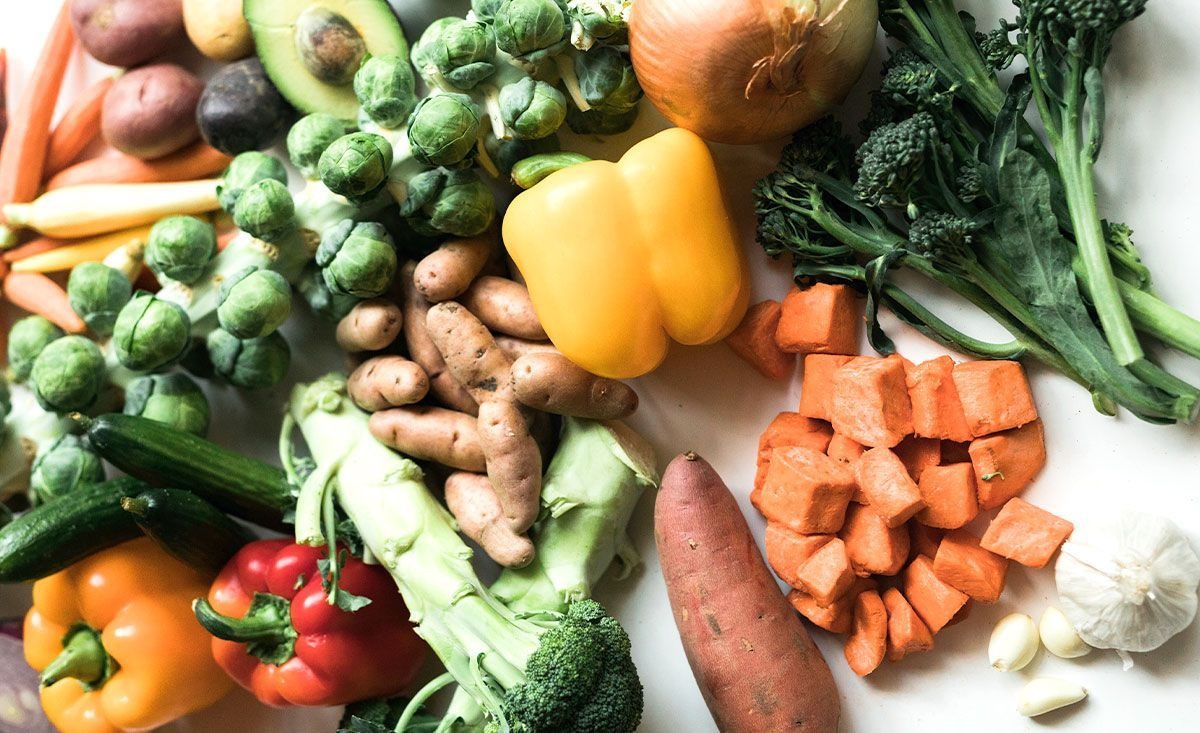
High fiber foods are legumes, whole grains, nuts and seeds, fruit eaten with the skin on, and vegetables. With one plate of cooked lentils (14.2 g), two slices of wholemeal bread (3.6 g) and one unpeeled pear (4.7 g) you are already at 22.5 g of the 25 g a day EFSA sets. Here is how much fiber each food has, with the database identifier next to it, and what the evidence says about each benefit claimed for it.
High fiber foods: the full chart
The high fiber foods that concentrate the most per 100 g are wheat bran (42.8 g), chia (34.4 g) and flaxseed (27.3 g). But per real serving legumes win: a 180 g plate of cooked lentils gives 14.2 g. The chart ranks 36 foods with fiber by content.
The values per 100 g are traceable to a database: every row carries its identifier from USDA SR Legacy (version 2018-04) or Foundation Foods (version 2025-04-24), consulted on 2026-08-14. The grams per serving are not a database figure: they are a convention of standard Spanish dietetic practice (legume plate 180 g cooked, pasta and rice 150 to 200 g cooked, fruit one piece, nuts 30 g). The colour code uses the labelling thresholds of Regulation (EC) 1924/2006: High from 6 g/100 g or 3 g/100 kcal and Source from 3 g/100 g or 1.5 g/100 kcal; Low is our own label for whatever falls below, not a category of the Regulation.
| Food | g fiber/100 g | Serving | g per serving | Soluble | Insoluble | Source (ID) |
|---|---|---|---|---|---|---|
| Wheat bran, crude High | 42.8 | 15 g | 6.4 | n/a | n/a | USDA SR 169722 |
| Chia seeds, dried High | 34.4 | 15 g | 5.2 | n/a | n/a | USDA SR 170554 |
| Flaxseed, dried High | 27.3 | 15 g | 4.1 | n/a | n/a | USDA SR 169414 |
| Air-popped popcorn High | 14.5 | 25 g | 3.6 | n/a | n/a | USDA SR 167959 |
| Raw almonds High | 12.5 | 30 g | 3.8 | n/a | n/a | USDA SR 170567 |
| Dark chocolate 70 to 85% High | 10.9 | 25 g | 2.7 | n/a | n/a | USDA SR 170273 |
| Rolled oats, raw High | 10.6 | 40 g | 4.2 | n/a | n/a | USDA SR 169705 |
| Raw pistachios High | 10.6 | 30 g | 3.2 | n/a | n/a | USDA SR 170184 |
| Dried figs High | 9.8 | 40 g (2 to 3 units) | 3.9 | 1.5 | 8.3 | USDA Foundation 326905 |
| Cooked lentils High | 7.9 | 180 g (plate) | 14.2 | n/a | n/a | USDA SR 172421 |
| Cooked chickpeas High | 7.6 | 180 g (plate) | 13.7 | n/a | n/a | USDA SR 173757 |
| Prunes High | 7.1 | 40 g (4 to 5 units) | 2.8 | n/a | n/a | USDA SR 168162 |
| Raw quinoa High | 7.0 | 60 g | 4.2 | n/a | n/a | USDA SR 168874 |
| Raw avocado High | 6.7 | 100 g (½ unit) | 6.7 | n/a | n/a | USDA SR 171705 |
| Raw walnuts High | 6.7 | 30 g | 2.0 | n/a | n/a | USDA SR 170187 |
| Raw raspberries High | 6.5 | 100 g | 6.5 | n/a | n/a | USDA SR 167755 |
| Cooked white beans High | 6.3 | 180 g (plate) | 11.3 | n/a | n/a | USDA SR 175203 |
| Wholemeal wheat bread High | 6.0 | 60 g (2 slices) | 3.6 | n/a | n/a | USDA SR 172688 |
| Cooked artichoke Source | 5.7 | 200 g | 11.4 | n/a | n/a | USDA SR 168386 |
| Cooked peas Source | 5.5 | 150 g | 8.3 | n/a | n/a | USDA SR 170420 |
| Cooked wholemeal pasta Source | 3.9 | 200 g cooked | 7.8 | n/a | n/a | USDA SR 168910 |
| Cooked broccoli Source | 3.3 | 200 g | 6.6 | n/a | n/a | USDA SR 169967 |
| Raw pear (Bartlett) Source | 3.1 | 150 g (1 unit) | 4.7 | 0.3 | 2.8 | USDA Foundation 746773 |
| Raw green kiwifruit Source | 3.0 | 100 g (1 unit) | 3.0 | 0.7 | 2.3 | USDA Foundation 327046 |
| Cooked quinoa Low | 2.8 | 150 g cooked | 4.2 | n/a | n/a | USDA SR 168917 |
| Raw carrot Low | 2.8 | 100 g | 2.8 | n/a | n/a | USDA SR 170393 |
| White bread Low | 2.7 | 60 g | 1.6 | n/a | n/a | USDA SR 174924 |
| Raw banana Low | 2.6 | 120 g (1 unit) | 3.1 | n/a | n/a | USDA SR 173944 |
| Raw apple with skin Low | 2.4 | 150 g (1 unit) | 3.6 | n/a | n/a | USDA SR 171688 |
| Cooked spinach Low | 2.4 | 200 g | 4.8 | n/a | n/a | USDA SR 168463 |
| Baked potato with skin Low | 2.2 | 200 g | 4.4 | n/a | n/a | USDA SR 170093 |
| Raw navel orange Low | 2.0 | 180 g (1 unit) | 3.6 | 0.2 | 1.8 | USDA Foundation 746771 |
| Cooked white pasta Low | 1.8 | 200 g cooked | 3.6 | n/a | n/a | USDA SR 169737 |
| Raw strawberries Low | 1.8 | 150 g | 2.7 | 0.7 | 0.9 | USDA Foundation 327699 |
| Cooked brown rice Low | 1.6 | 150 g cooked | 2.4 | n/a | n/a | USDA SR 169704 |
| Cooked white rice Low | 0.4 | 150 g cooked | 0.6 | n/a | n/a | USDA SR 168878 |
How to read the chart. Where there is no measurement it says "n/a", not an invented number. Total fiber comes from the AOAC enzymatic-gravimetric method and the soluble/insoluble split from AOAC 991.42, 991.43 and 993.19: these are different methods and each value is rounded separately, so soluble plus insoluble does not always add up to the total (you can see it in strawberries, 0.7 + 0.9 against 1.8).
Why the "soluble" column is nearly empty. The Spanish Food Composition Database (BEDCA) does not publish the soluble/insoluble split for any food, and USDA measures it only in Foundation Foods and only for a handful. Any chart that publishes it for 25 foods while citing BEDCA is copying without a source. Also, raw and cooked are not interconvertible by simple proportion, and mixing databases with different methods introduces a systematic error: that is why this chart uses USDA consistently.
Legumes
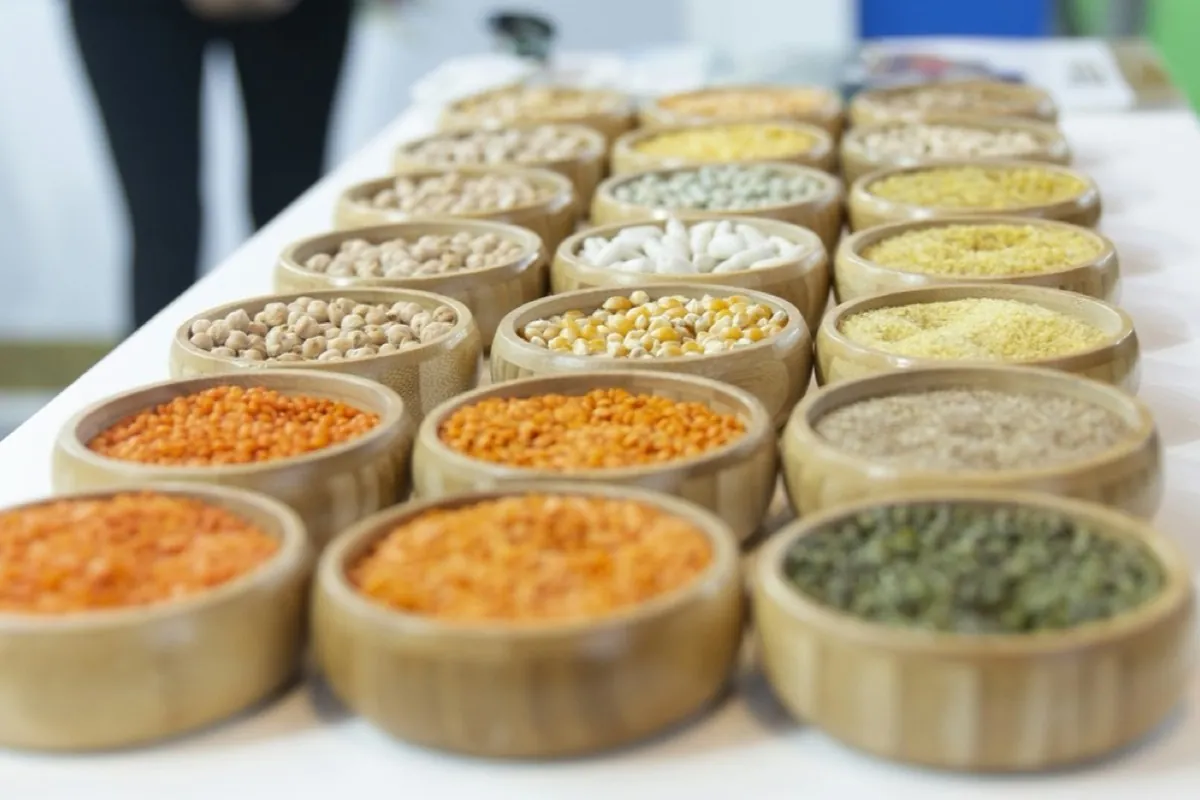
Legumes are the food with the most fiber per plate in the Spanish diet and they supply only 9.2% of the fiber actually eaten there (ANIBES, total sample). A 180 g plate of cooked lentils gives 14.2 g of fiber; chickpeas, 13.7 g; white beans, 11.3 g. One plate a day covers more than half the EFSA figure.
Nuts and seeds
Nuts concentrate a lot of fiber per 100 g and little per serving, because the real serving is 30 g. Almonds give 12.5 g/100 g (3.8 g per handful), pistachios 10.6 g (3.2 g) and walnuts 6.7 g (2.0 g). Seeds play in another league per 100 g: chia 34.4 g and flaxseed 27.3 g, but at 15 g per tablespoon they land at 5.2 and 4.1 g respectively. If you want the detail on each one, we have a complete guide to nuts and another one specifically on peanut properties and benefits.
Whole grains
Grains and flours are already the leading source of fiber in Spain (39.1% of the total, ANIBES, total sample), so swapping white for wholemeal pays off at every meal: wholemeal bread has 6.0 g/100 g against 2.7 g for white, and cooked wholemeal pasta 3.9 g against 1.8 g. A plate of pasta goes from 3.6 to 7.8 g of fiber just by changing the packet, and two slices of wholemeal bread add 3.6 g.
In oats, part of that fiber is beta-glucans, the fiber with the most authorized health claims in the European Union: cholesterol, post-meal blood glucose and faecal bulk, plus the two disease risk reduction claims of Regulations (EU) 1160/2011 and 1048/2012 for oat and barley beta-glucan. Whole grain also has data of its own: for every extra 15 g of whole grain a day, the meta-analysis in The Lancet observed a relative risk of 0.94 for all-cause mortality (95% CI 0.92 to 0.95) and 0.93 for coronary heart disease (0.89 to 0.98), with reductions of 13% to 33% comparing high with low intake (Reynolds et al., 2019).
Fruit
Fruit supplies 16.6% of the fiber eaten in Spain (ANIBES, total sample) and its figure depends on one gesture: peeling it or not. Pear has 3.1 g/100 g, of which 2.8 g are insoluble (USDA Foundation 746773), and part of that fiber is in the skin. Per piece, pear gives 4.7 g, apple with skin 3.6 g, navel orange 3.6 g, banana 3.1 g and kiwifruit 3.0 g. Dried fruit multiplies the figure: dried figs 9.8 g/100 g and prunes 7.1 g.
Vegetables
Vegetables supply 24.1% of the fiber eaten in Spain (ANIBES, total sample) and their advantage is the serving: 200 g of cooked artichoke give 11.4 g of fiber and 200 g of broccoli, 6.6 g. In cooked broccoli that fiber is practically all insoluble: the soluble fraction falls below 0.1 g/100 g in two independent Foundation Foods samples (321796 and 321752), with total fiber between 2.2 and 3.2 g against the 3.3 g in SR Legacy. Cooked spinach gives 4.8 g per 200 g serving and raw carrot 2.8 g per 100 g.
What is dietary fiber?
Dietary fiber is the part of plant foods your small intestine neither digests nor absorbs: it reaches the colon almost intact, where part of it ferments and part of it adds bulk. The name covers compounds that behave very differently, and EFSA sets 25 g a day. (EU legal texts spell it fibre, the British form; this guide uses the US spelling fiber except inside quotations.)
Soluble fiber
Soluble fiber dissolves in water and forms a gel that slows the passage of nutrients through the small intestine; that is where its effects on cholesterol and on glucose after meals come from. It is in oats and barley (beta-glucans), fruit (pectins), legumes and psyllium. Psyllium resists fermentation, so it softens stools without as much gas as inulin or FOS.
Insoluble fiber
Insoluble fiber does not form a gel: it adds bulk and speeds up passage through the gut. It is the fiber in wheat bran, fruit skins, leafy vegetables and whole grains. For wheat bran, the European Union authorizes saying that it speeds up transit and increases stool bulk, provided the food is high in fiber (at least 6 g per 100 g); the transit effect is obtained with 10 g a day.
Resistant starch
Resistant starch escapes digestion in the small intestine and behaves like fermentable fiber. It is found in legumes and in slightly unripe bananas: swapping digestible starch for resistant starch in a meal (with at least 14% of the total starch as resistant) reduces the glucose rise afterwards.
| Feature | Soluble fiber | Insoluble fiber |
|---|---|---|
| What it does in water | Dissolves and forms a viscous gel | Does not dissolve, holds water and adds mass |
| Where it is found | Oats and barley, legumes, fruit (pectins), psyllium | Wheat bran, fruit skin, vegetables, whole grains |
| Main measured effect | Cholesterol and post-meal blood glucose | Faecal bulk and transit speed |
| Authorized EU claim | "Beta-glucans contribute to the maintenance of normal blood cholesterol levels" (≥ 1 g per quantified portion; the effect is obtained with 3 g/day) | "Wheat bran fibre contributes to an acceleration of intestinal transit" (HIGH FIBRE; 10 g/day) |
| Fermentation | High for inulin and FOS; low for psyllium | Low |
| Gas produced | More, if highly fermentable | Less |
| Best suited to | Cholesterol, post-meal glucose, satiety | Regularity and stool bulk |
How much fiber you need per day
EFSA sets an adequate intake of 25 g of fiber a day for adults, with no distinction between men and women; the WHO recommends at least 25 g a day of naturally occurring fiber. In Spain, adults eat 15.8 g a day among those who report their diet plausibly: a 37% shortfall.
- EFSA: 25 g/day in adults, the same figure for both sexes (Dietary Reference Values, 2017); in children, from 10 g/day (1 to 3 years) to 21 g (15 to 17).
- WHO 2023: at least 25 g/day in adults (strong recommendation).
- Energy-based: 14 g per 1,000 kcal (25 g in women, 38 g in men), the US reference (Dahl and Stewart, 2015, J Acad Nutr Diet).
- What Spain actually eats: 15.8 g/day in plausible reporters and 12.5 g/day in the total sample (ANIBES, Nutrients 2017).
Watch what those 25 g are: EFSA publishes them as an adequate intake, the threshold below which it does not consider normal bowel function assured. A floor, not an optimum. The Reynolds meta-analysis places the best behaviour between 25 and 29 g/day and adds that above 30 g/day there are additional benefits.
The fiber eaten in Spain comes from grains and flours (39.1%), vegetables (24.1%), fruit (16.6%) and legumes (9.2%), and it concentrates in the main meal (47.4%) and dinner (28.3%). Breakfast stops at 13.0% (total sample, ANIBES).
Health notice. This content is informational and does not replace the advice of a healthcare professional. If you have a digestive condition, diabetes or you are on medication, check before changing your fiber intake.
Benefits of fiber according to the evidence
The evidence on fiber is strong in epidemiology and modest in randomized trials. Each benefit is covered separately below, from the best measured to the one that holds up worst when you read the studies.
Mortality and disease
The reference is the review by Reynolds and colleagues in The Lancet (2019): 185 prospective studies and 58 trials with 4,635 adults. For every extra 8 g of fiber a day, the relative risk was 0.93 for all-cause mortality (95% CI 0.90 to 0.95), 0.81 for coronary heart disease (0.73 to 0.90), 0.85 for type 2 diabetes (0.82 to 0.89) and 0.92 for colorectal cancer (0.89 to 0.95). These are observational associations and they refer to high fiber foods: extrapolating them to a supplement is not supported by the meta-analysis.
Cholesterol
Oat and barley beta-glucans are the only fiber with a cholesterol effect recognised by the European Union. In a meta-analysis of 28 trials, at 3 g/day or more LDL fell by 0.25 mmol/L (95% CI 0.20 to 0.30), about 9.7 mg/dL, and total cholesterol by 0.30 mmol/L, with no effect on HDL or triglycerides (Whitehead et al., 2014, Am J Clin Nutr). Doses ranged from 3.0 to 12.4 g/day for 2 to 12 weeks, and the analysis included internal reports from a company in the beta-glucan sector. With total fiber the effect is much smaller: in 36 trials, total cholesterol fell by 0.15 mmol/L (Reynolds et al., 2019). A product can say so on its label if it provides at least 1 g of beta-glucans per serving; the effect is obtained with 3 g a day.
Blood glucose
Fiber lowers blood glucose in people with diabetes or prediabetes, not in healthy people. In 42 trials with 1,789 adults with diabetes or prediabetes, increasing fiber lowered HbA1c by 2.00 mmol/mol (95% CI −3.30 to −0.71) and fasting glucose by 0.56 mmol/L (Reynolds et al., 2020, PLoS Medicine). Outside the diabetic population there was no significant effect on HbA1c (6 trials, SMD −0.35; 95% CI −0.73 to 0.03; low-quality evidence). There is an acute effect, though: oat or barley beta-glucans in a meal (at least 4 g per 30 g of carbohydrate) reduce the glucose rise afterwards. If you take diabetes medication, a big change in fiber can alter your glucose response: talk to your doctor first.
Satiety and weight
Viscous fiber lowers body weight by 0.33 kg on average: 62 trials with 3,877 people (95% CI −0.51 to −0.14), with 0.63 cm less waist circumference and no significant effect on body fat percentage (Jovanovski et al., 2020, Am J Clin Nutr). The most viscous fibers (pectins, beta-glucans, guar gum) reduced appetite in 59% of comparisons against 14% for the less viscous ones, though with small effects and no clear dose-response (Wanders et al., 2011, Obesity Reviews). Any product sold as slimming because it contains fiber is overselling an effect of 330 grams. To make a meal filling, protein leads; fiber supports.
Intestinal transit
Fiber improves chronic constipation. In 16 trials with 1,251 people it improved frequency (SMD 0.72; 95% CI 0.36 to 1.08), consistency and straining, with 66% of responders against 41% in the control group (van der Schoot et al., 2022, Am J Clin Nutr). Psyllium had the largest effect: +3.08 bowel movements per week (95% CI 0.61 to 5.54), at more than 10 g/day for at least 4 weeks; only from then on did total transit time improve significantly (−18.4 hours). Galactooligosaccharides added 0.71 bowel movements per week, inulin improved consistency but not frequency, and polydextrose showed no effect.
Microbiota: what the evidence really says
Fiber does not increase microbiota diversity. The best meta-analysis pools 64 trials with 2,099 healthy adults: fiber increases Bifidobacterium (SMD 0.64) and Lactobacillus (SMD 0.22), but there is no difference in alpha diversity (So et al., 2018, Am J Clin Nutr). For faecal butyrate the effect is close to zero (SMD 0.24; p = 0.05) and it is a poor indicator of real production. Only fructans (inulin and FOS) and galactooligosaccharides increased both genera. Also, fiber is not a synonym for prebiotic: the international consensus requires the benefit to be documented (Gibson et al., 2017), and changing the count of one bacterium is a surrogate marker, not a clinical outcome. No authorized health claim on microbiota exists for fiber.
Which fiber to choose for your goal
There is no single best fiber: it depends on the goal. For transit, the most effective in trials is psyllium, at more than 10 g a day for at least 4 weeks; for cholesterol, oat or barley beta-glucans at 3 g a day; for post-meal glucose, viscous fibers within the meal; and if what you want is less gas, poorly fermentable fiber increased little by little. The chart crosses goal, fiber, where to find it and the dose with evidence behind it.
| Goal | Type of fiber | Where it is | Dose with evidence | What the data shows |
|---|---|---|---|---|
| Bowel regularity | Psyllium (soluble, poorly fermentable) | Pharmacy supplement; not in the JustLoading catalogue | > 10 g/day, ≥ 4 weeks | +3.08 bowel movements/week (van der Schoot, 2022) |
| Stool bulk | Insoluble bran fiber | Wheat bran, wholemeal bread and pasta | Food qualifying as HIGH FIBRE | Authorized EU claim on increase in faecal bulk |
| Faster transit | Wheat bran fiber | Wheat bran | HIGH FIBRE + 10 g/day | Authorized EU claim on acceleration of intestinal transit |
| Cholesterol | Beta-glucans | Oats, oat bran, barley | 3 g/day (≥ 1 g per portion) | LDL −0.25 mmol/L (Whitehead, 2014) |
| Post-meal glucose | Viscous fiber in the meal | Oats and barley, pectin-rich fruit, legumes | ≥ 4 g of beta-glucans per 30 g of carbohydrates | Authorized EU claim on post-meal blood glucose |
| Blood glucose with diabetes or prediabetes | Total dietary fiber | Legumes, whole grains, vegetables | +15 g/day or reaching 35 g/day | HbA1c −2.00 mmol/mol (Reynolds, 2020) |
| Satiety | Viscous fiber | Fruit pectins, beta-glucans, guar gum | No established dose-response | Appetite reduced in 59% of comparisons (Wanders, 2011) |
| Body weight | Viscous fiber | Foods, not powders | ≥ 4 weeks | −0.33 kg on average (Jovanovski, 2020) |
| Long-term health | Fiber from food | Legumes, whole grain, fruit, vegetables, nuts | 25 to 29 g/day, above 30 g adds further benefit | All-cause mortality RR 0.93 per +8 g/day (Reynolds, 2019) |
| Less gas | Poorly fermentable fiber | Psyllium, bran; avoid a sudden excess of inulin and FOS | Gradual increase | Fiber increases flatulence: SMD 0.80 (van der Schoot, 2022) |
Fiber supplements: psyllium, glucomannan and inulin
Psyllium, glucomannan and inulin are the three most searched isolated fibers and they work differently: psyllium holds water and adds bulk, glucomannan (from konjac) forms a very viscous gel and inulin ferments, with more gas. JustLoading sells none of these three; its fiber powder, DailyFiber, uses others (below). Glucomannan is the only fiber with a weight effect recognised in the EU, and only at 3 g a day before meals, with one or two glasses of water and a low-calorie diet. To choose, see which fiber supplement to choose and how to take psyllium. A tub of fiber does not inherit the data of a plate of lentils: the evidence above is for fiber from food.
How to reach 30 g of fiber a day
Reaching 30 g of fiber a day does not need supplements: it needs legumes, whole grain cereal, fruit with the skin on and nuts placed in the meals you already eat. This one-day menu adds up to 40.7 g with normal servings, and the running total is shown so you can see where each gram is won.
| When | What you eat | Fiber | Running total |
|---|---|---|---|
| Breakfast | 40 g of rolled oats | 4.2 g | 4.2 g |
| Breakfast | 1 kiwifruit (100 g) | 3.0 g | 7.2 g |
| Mid-morning | 30 g of almonds | 3.8 g | 11.0 g |
| Lunch | Plate of cooked lentils (180 g) | 14.2 g | 25.2 g |
| Lunch | 2 slices of wholemeal bread (60 g) | 3.6 g | 28.8 g |
| Afternoon snack | 1 pear with skin (150 g) | 4.7 g | 33.5 g |
| Dinner | 200 g of cooked broccoli | 6.6 g | 40.1 g |
| Dinner | 150 g of cooked white rice | 0.6 g | 40.7 g |
The plate of lentils makes up 35% of the total on its own and the white rice at dinner adds 0.6 g. Drop the snack and the oats and you are still at 31.8 g. The minimum version (legumes, 14.2 g; wholemeal bread, 3.6 g; one unpeeled pear, 4.7 g; a handful of almonds, 3.8 g) already reaches 26.3 g, above the EFSA adequate intake. Five changes, in order of payoff:
- One plate of legumes a day: 14.2 g with lentils, 13.7 g with chickpeas; 56% of the recommendation in one meal.
- Wholemeal bread and pasta: bread goes from 1.6 to 3.6 g per 60 g and pasta from 3.6 to 7.8 g per plate.
- Fruit with the skin on: part of the pear's fiber is in the skin.
- A 30 g handful of nuts: 3.8 g with almonds, 3.2 g with pistachios.
- Attack breakfast: it supplies only 13.0% of the day's fiber; 40 g of oats and a piece of fruit raise it to 7.2 g.
If your gap is between meals, fiber powder is a convenience option. DailyFiber, from JustLoading, gives 5.1 g of fiber per 6 g serving, from Fibersol® (resistant maltodextrin) and oat extract with beta-glucans (100 mg per serving), plus the probiotic LactoSpore® (133 mg), and it dissolves in any drink. No powder or bar replaces high fiber foods: the Reynolds 2019 evidence comes from foods, not from added fiber.
Fiber and sport
There are no official fiber intake recommendations in sports nutrition guidelines: it is a gap acknowledged in the literature (Ozduran and Gezmen-Karadag, 2026, IJSNEM). What is documented is that from about 2 hours of exercise at 60% of VO₂max significant digestive disturbances appear, such as intestinal injury, greater permeability, slower gastric emptying and malabsorption, and that heat and running make them worse (Costa et al., 2017).
That is why any figure like "cut fiber 24 hours before competing" does not come from a consensus of sports nutrition societies. The 2026 review, narrative and not a meta-analysis, adds that many athletes do not even reach the general population targets, because of pre-competition restrictions or fear of digestive discomfort, and proposes periodising fiber, choosing sources and increasing gradually. Fiber is worked on during normal training days, not on the morning of the race.
Side effects and who should be careful
Raising fiber has a cost. In controlled trials it significantly increases flatulence (SMD 0.80; 95% CI 0.47 to 1.13) and improves neither bloating nor abdominal pain. There is no official upper limit, neither from EFSA nor from the US system, but tolerance varies: increase gradually (usual clinical practice, although no trial compares gradual against sudden increases) and with plenty of fluid.
Irritable bowel syndrome. Here fiber is not the automatic answer. In a network meta-analysis of 51 trials with 4,644 patients, soluble fiber came out neither better nor worse than the other alternatives, and only 13 trials had a low risk of bias (Black et al., 2020, Lancet Gastroenterol Hepatol). The low-FODMAP diet is restrictive, temporary and should be supervised by a dietitian.
A note on bars. Several bars on the market contain polyols such as maltitol and warn on the label of a possible laxative effect. That effect does not come from the fiber: if you eat two or three in a row and feel unwell, the culprit is not their fiber content.
When to check before increasing fiber: if you have inflammatory bowel disease (especially during a flare), intestinal stricture, a history of sub-obstruction or recent digestive surgery, irritable bowel syndrome, swallowing problems or drug treatment for diabetes; and whenever constipation comes with blood, weight loss, a sudden change in bowel habit or onset after 50. That last one is not treated with fiber: it is investigated.
Frequently asked questions about fiber
Nine of the questions Google shows under "People also ask" for fiber.
What foods are high in fiber?
Legumes, nuts and seeds, whole grains, fruit eaten with the skin on, and vegetables. Per 100 g wheat bran leads (42.8 g), followed by chia seeds (34.4 g) and flaxseed (27.3 g); per real serving legumes win, with 14.2 g in a 180 g plate of cooked lentils.
How much fiber do you need per day?
EFSA sets an adequate intake of 25 g of fiber a day for adults, the same for men and women, and the WHO recommends at least 25 g a day of naturally occurring fiber. For children and adolescents EFSA sets 10 g a day at 1 to 3 years, rising to 21 g at 15 to 17.
What is the best fiber for constipation?
Psyllium (Plantago ovata). In 16 trials in people with chronic constipation it increased stool frequency by 3.08 bowel movements per week, at more than 10 g a day for at least 4 weeks (van der Schoot et al., 2022). JustLoading does not sell psyllium. If constipation is persistent or comes with alarm signs, talk to a healthcare professional.
What is the highest fiber food?
Wheat bran, with 42.8 g of fiber per 100 g (USDA SR Legacy 169722), followed by chia seeds (34.4 g) and flaxseed (27.3 g). Nobody eats 100 g of bran: per real serving legumes win, with about 14.2 g in a plate of lentils against the 6.4 g in 15 g of bran.
What are the top 10 high fiber foods?
By grams per 100 g, the first ten in the chart are: wheat bran (42.8), chia seeds (34.4), flaxseed (27.3), air-popped popcorn (14.5), almonds (12.5), dark chocolate 70 to 85% (10.9), rolled oats and pistachios (10.6), dried figs (9.8) and cooked lentils (7.9). Values from USDA SR Legacy and Foundation Foods.
What happens if you eat fiber every day?
In controlled trials fiber significantly increased flatulence (SMD 0.80) and improved neither bloating nor abdominal pain (van der Schoot et al., 2022): it helps you go, but it produces more gas. No tolerable upper intake level has been set. If you have a digestive condition or take medication, check with a healthcare professional before increasing it.
Is soluble or insoluble fiber better for constipation?
The specific fiber matters more than the label. The largest effect in the van der Schoot (2022) meta-analysis belonged to psyllium, a soluble fiber that is highly viscous and poorly fermentable. Among insoluble fibers, wheat bran speeds up transit, at 10 g a day in a food that is high in fiber.
Which foods have soluble fiber and which have insoluble fiber?
Very few have that split measured: the Spanish BEDCA database does not publish it and USDA measures it in only a handful. With real data: pear has 0.3 g soluble and 2.8 g insoluble per 100 g; kiwifruit, 0.7 and 2.3; dried figs, 1.5 and 8.3; cooked broccoli is almost entirely insoluble.
What is a high fiber breakfast?
A breakfast of 40 g of rolled oats (4.2 g), one kiwifruit (3.0 g) and 30 g of almonds (3.8 g) adds up to about 11 g of fiber, almost half the 25 g a day set by EFSA. In Spain breakfast supplies only 13.0% of the day's fiber (ANIBES, 2017).
This content is informational and does not replace the advice of a healthcare professional. If you have a digestive condition, diabetes or you are on medication, check before changing your fiber intake.
