














Shopping Cart
There are no more items in your cart
- Updated
- José María Navas Humanes
- Work out
TL;DR: on your first day at the gym, do a full-body routine of 45-60 minutes: a 5-10 minute warm-up, five simple exercises (leg press, lat pulldown, machine chest press, seated row and plank) with 2-3 sets of 10-12 reps at a weight that leaves about 3 reps in reserve, and a cool-down. After that, 2-3 days a week. With high blood pressure, heart problems, a previous injury or pregnancy, see your doctor first.
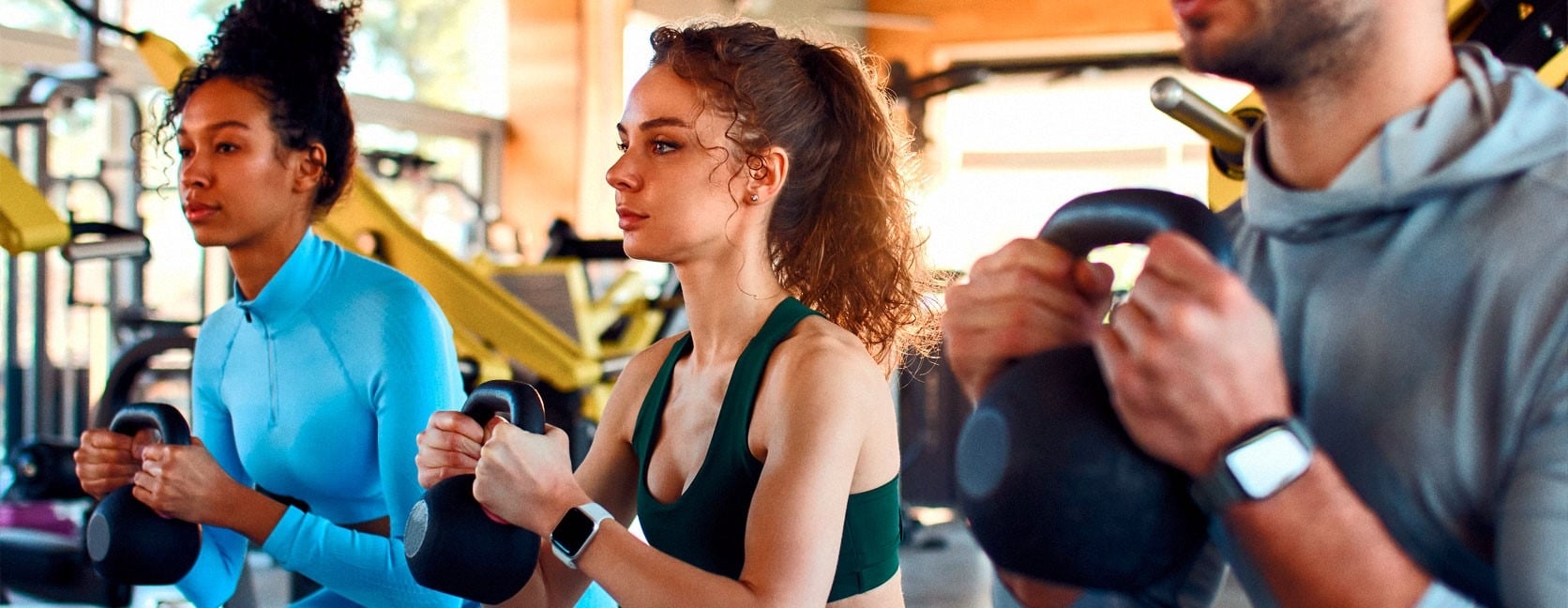
Starting at the gym is daunting: there are lots of machines, each with its own setting, and it is not clear where to begin. With a simple plan, the first day stops being a problem. Here is how to prepare, a routine for day one, how to carry on through the first weeks and what to eat.
Before you go: your goal, what to bring and who to ask
What is the first thing I should do at the gym?
Ask an instructor for an induction: where the machines are, how to adjust them and what the rules of the floor are. Then be clear about your goal (losing fat, gaining strength, improving general fitness) and follow a simple routine instead of improvising from machine to machine.
It helps to have the goal written down, because it decides the routine and lets you measure whether you are progressing. Bring comfortable clothes, closed shoes, a towel and a bottle of water. If you have high blood pressure, a heart condition, a previous injury or you are pregnant, see your doctor first.
To set the goal, a good question is what you want to notice in three months: more energy, climbing stairs without getting winded, losing fat or gaining strength. Each answer calls for more or less cardio, but they all start from the same base of strength work and consistency.
Routine for your first day at the gym
On day one, the aim is to learn the movements and leave wanting to come back, not to finish exhausted. A full-body routine on guided machines works legs, back, chest and core safely.
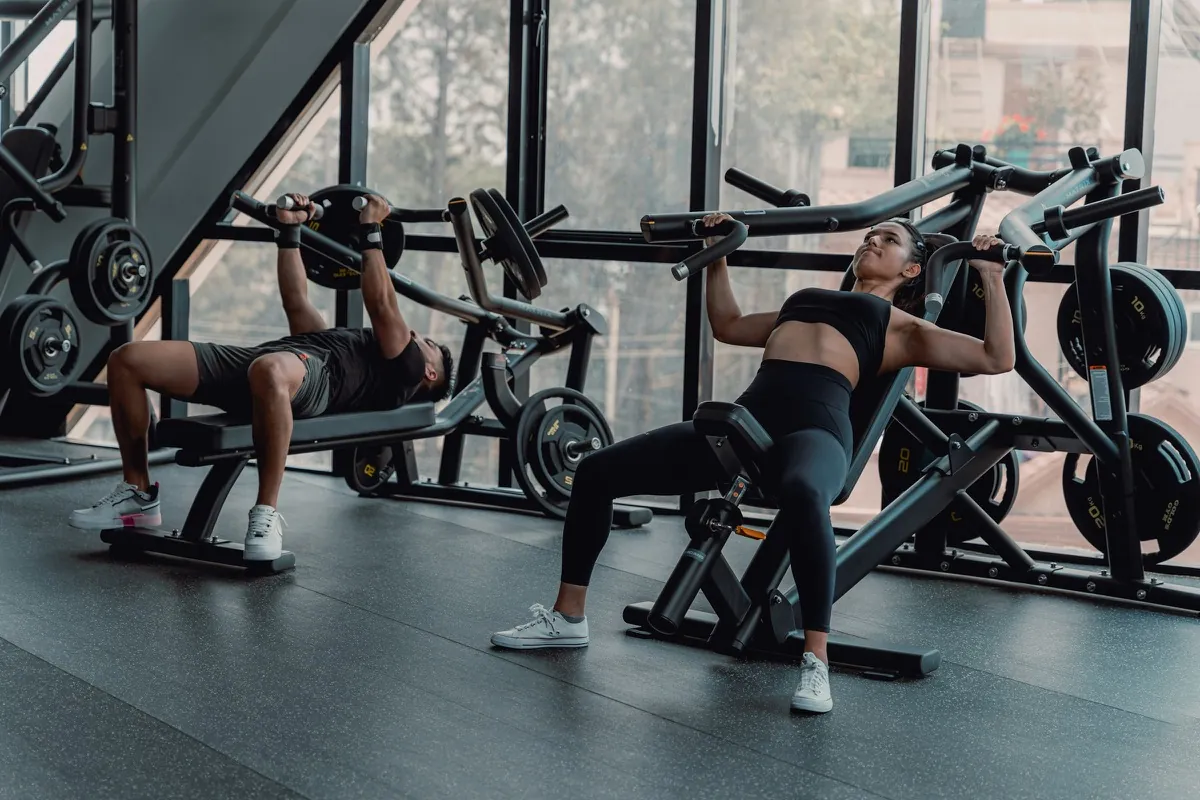
| Block | Exercise | Sets × reps | Rest |
|---|---|---|---|
| Warm-up | Easy treadmill or bike and mobility for shoulders, hips and ankles | 5-10 minutes | - |
| Legs | Leg press | 2-3 × 10-12 | 60-90 s |
| Back | Lat pulldown | 2-3 × 10-12 | 60-90 s |
| Chest | Machine chest press | 2-3 × 10-12 | 60-90 s |
| Back | Seated row | 2-3 × 10-12 | 60-90 s |
| Core | Plank | 2-3 × 20-30 s | 45-60 s |
| Cool-down | Easy walking and stretching | 5 minutes | - |
How much weight should you use? One that lets you finish each set with about 3 reps in reserve, meaning you could do 3 more with good technique. If you are unsure, start lighter: you can add weight next week.
What exercises should you do on your first day at the gym?
Five simple movements that cover the whole body: leg press, lat pulldown, machine chest press, seated row and plank. Do them for 2-3 sets of 10-12 reps (the plank for 20-30 seconds) at a moderate weight. Machines guide the movement and let you concentrate on technique.
How long should you train on your first day?
Between 45 and 60 minutes, warm-up and cool-down included. More time adds nothing when you are starting: the more tired you finish, the worse your technique and the sorer you are the next day. It is better to leave with energy than to have given everything.
The first weeks
Repeat the same routine 2 to 3 days a week, with a rest day between sessions. When you complete all your sets of 12 reps with three in reserve, raise the weight a little. If you want a complete plan for the first weeks, the JustLoading exercise guide in PDF (in Spanish) covers it.
Once you have mastered the machines, compound exercises (squats, push-ups, bench press) work several muscle groups at once and are the base of almost any programme. Start with an empty bar or your own body weight, and ask someone to check your technique the first few times.
What is a gym routine for a beginner woman?
The same base as for a man: full body, simple exercises, 2-3 sets of 10-12 reps and 2-3 days a week. What changes is the load, which is adjusted to each person, not the plan. In the first month there are no routines for women and routines for men, there are different loads.
Is it better to train 4 or 5 days?
When you start, neither: the best fit is 2 or 3 full-body days with rest between them. Muscle improves during rest, and your body, joints and diary all need to adapt before you raise the frequency. With more months of practice you can move to 4 days with split routines.
If you wonder which burns more, cardio or strength, we compare them in cardio or strength, which first. To begin with, combine strength work like this routine with some walking.
Warm-up and technique to avoid injury
How do you avoid injury when starting at the gym?
Warm up for 5 to 10 minutes, learn the technique of each exercise before adding weight, do not overdo the first sessions and stop if you feel pain. Muscle discomfort is normal. Sharp pain in a joint is not, and it is the signal to stop and check your posture.
The warm-up has two parts: some light cardio to raise your temperature, and mobility for the joints you are about to use. Asking an instructor to correct your posture on two or three exercises is the quickest way to avoid habits that are hard to lose later.
Soreness, rest and how to measure progress
Is it normal to be sore after the first day?
Yes. It is common to feel sore 24 to 48 hours later, especially in the legs, because the muscle is not used to that work. It eases in a few days with gentle movement. If the pain is sharp, there is swelling or it does not improve, see a health professional.
Rest is part of the routine: sleeping enough and leaving a day between sessions lets the muscle repair and adapt. Ignoring it leads to fatigue and a higher risk of injury.
To know whether you are progressing, measure several things at once: how much weight you lift on each exercise, how many reps you do, the time or distance in cardio, your body measurements and how you feel when training. Note down each session in a notebook or on your phone. Looking only at the scales misleads, because body weight changes little in the first weeks.
What to eat and whether you need supplements
The base is to eat simply and regularly: protein at every meal (eggs, fish, lean meat, pulses, dairy), complex carbohydrate (rice, oats, wholemeal bread, potato) and healthy fats such as olive oil or nuts. What to have before and after training is in what to eat for breakfast before a workout and what to eat after the gym.
Do I need supplements to start at the gym?
They are not essential. The first thing is a varied and sufficient diet. If you struggle to reach the protein you need from food, a whey shake helps. Creatine monohydrate, at 3 g a day, is the best-supported supplement, but it is not needed in the first weeks.
The Pack Tu Primer Paso brings together a 255 g neutral-flavour creatine monohydrate, a 400 g vanilla whey and a protein bar with creatine in chocolate hazelnut. The whey gives 23.4 g of protein per 30 g, with 121 kcal. The creatine is 3 g a day in 200-250 ml of water, and its authorised claim is only for short, high-intensity exercise. The 40 g bar has 12 g of protein and 3.0 g of creatine, and contains milk, soy and tree nuts.
Creatine is not for under-18s or during pregnancy, and with kidney disease you should check with your doctor first.
References
- American College of Sports Medicine position stand. Progression models in resistance training for healthy adults. American College of Sports Medicine, Med Sci Sports Exerc, 2009
- World Health Organization 2020 guidelines on physical activity and sedentary behaviour. Bull FC et al., Br J Sports Med, 2020
